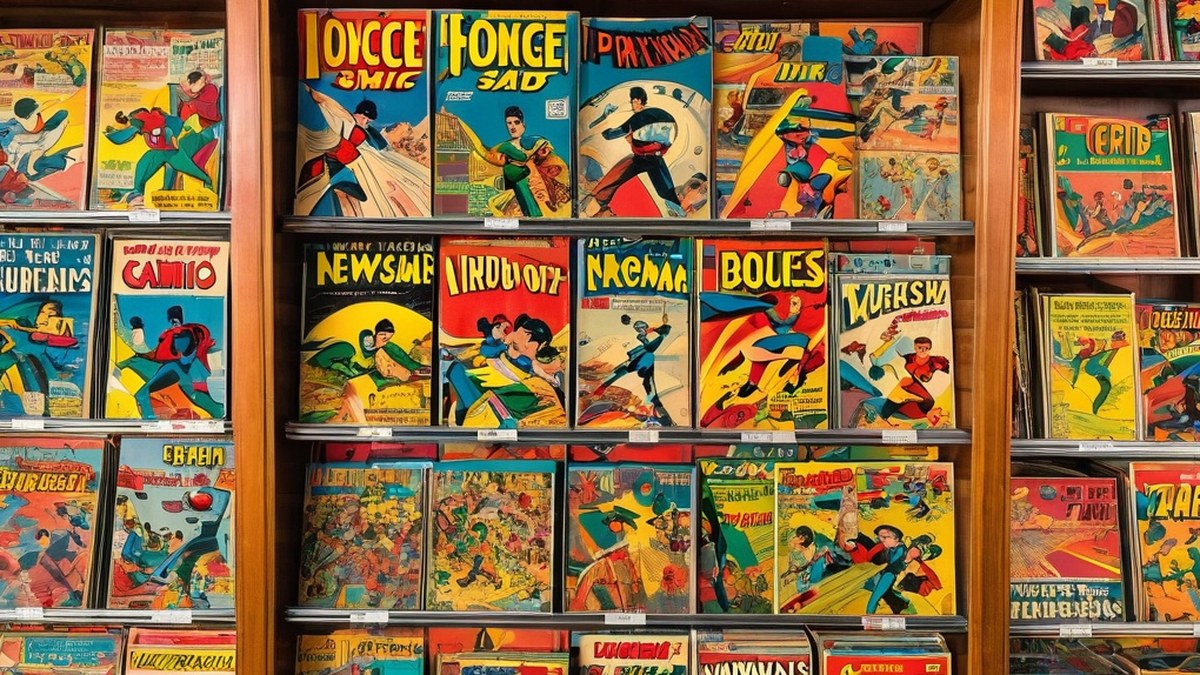
By the early 1950s, horror and crime comics — particularly those published by EC Comics, known for their graphic, morally complex stories — had become hugely popular but also deeply controversial. Psychiatrist Fredric Wertham's 1954 book Seduction of the Innocent argued, with evidence many critics have since called methodologically weak, that comic books caused juvenile delinquency, and a US Senate subcommittee held televised hearings on the issue that same year, during which EC publisher William Gaines was famously grilled over a comic book cover. Facing the real threat of government regulation, the comic book industry formed the Comics Magazine Association of America and adopted the Comics Code, a strict self-censorship standard administered by the newly created Comics Code Authority. The code banned depictions of graphic violence and gore, sympathetic criminals or 'evil' triumphing over 'good,' sexual content, and a long list of other restrictions, and because most major distributors and retailers refused to carry comics without the Code's seal of approval, it became effectively mandatory for mainstream publishers. EC Comics, whose horror titles had driven much of the moral panic, discontinued its comic line entirely in 1955 and shifted focus to Mad magazine, which wasn't considered a comic book and thus escaped the Code's jurisdiction. The Code's influence persisted, gradually weakening from the late 1960s onward and becoming largely irrelevant by the 1980s and 1990s as publishers increasingly ignored it, before being formally abandoned entirely in 2011.
What If Comic Books Had Never Adopted the Comics Code Authority's Censorship Rules?
In 1954, facing a moral panic over horror and crime comics, the American comic book industry adopted a strict self-censorship code that banned graphic violence, sexual content, and sympathetic criminals, among dozens of other restrictions. The Comics Code Authority's seal of approval became nearly mandatory for distribution, and it shaped what American comics could depict for the next several decades.
The History
How It Changed
Imagine the comic book industry, facing the same 1954 moral panic and Senate scrutiny, responds differently — perhaps through a more narrowly targeted set of restrictions focused specifically on content clearly aimed at young children, while preserving space for horror, crime, and more mature genres aimed at older readers, an age-stratified approach that several other media industries eventually adopted but that 1950s American comics did not.
The Initial Impact
Without the Code's sweeping restrictions, EC Comics and similar horror and crime publishers would very plausibly have survived the mid-1950s moral panic in something closer to their existing form, continuing to publish the kind of graphic, morally complex stories that had made them popular, rather than being forced to discontinue their comics line entirely as actually happened.
The Local Picture
For American comic book readers and creators specifically, a Code-free industry would have meant comics remaining a medium capable of addressing mature, complex, and genuinely frightening material throughout the late 1950s and 1960s, rather than becoming — as the actual Code-regulated industry did — an overwhelmingly child-focused medium that took decades to gradually regain the creative range it had briefly explored before 1954.
The Global Picture
At a broader cultural level, American comics' decades-long association with children's entertainment specifically, as opposed to the more varied, all-ages medium comics became in many other countries (manga in Japan, for instance, developed with far fewer content restrictions and consequently serves readers across all age groups and genres), traces substantially to the Code's lasting influence on American publishers, retailers, and public perception — a Code-free American comics industry could plausibly have developed a market structure and cultural reputation much closer to manga's, with comics for adults, horror comics, and mature genre work remaining a normal, ongoing part of the medium rather than something American comics had to rediscover and rebuild from the 1970s underground comix movement onward.
Specific Predictions
The sections above build the case in general terms. Here's what that case actually implies, stated as concrete claims rather than hedged possibilities — still part of the thought experiment, not a verified forecast, but specific enough to agree or disagree with.
- The underground comix movement of the late 1960s and early 1970s, which emerged specifically as a reaction against the mainstream Code-regulated industry's restrictions, would likely not develop in the same form or with the same cultural significance, since mature and experimental comic content would already have a legitimate mainstream outlet.
- American comics' genre range would likely remain broader and more varied through the late 1950s and 1960s, with horror and crime comics continuing as significant, ongoing genres rather than nearly disappearing for over a decade.
- Comics as a medium would likely shed the strong 'just for kids' cultural perception that persisted in America for decades considerably earlier, given that comics in the actual timeline didn't fully escape this perception in mainstream culture until the graphic novel boom of the 1980s and beyond.
- EC Comics specifically would very plausibly have survived as an ongoing comics publisher rather than pivoting its surviving output almost entirely to Mad magazine, potentially remaining a major industry player into the following decades.
Extreme Scenarios
These push the premise furthest — the least likely, most speculative branches worth considering precisely because they show where the reasoning starts to strain.
American comics develop a manga-like all-ages market structure decades early
If American comics retained genre diversity and avoided the strong child-focused cultural branding the actual Code produced, the industry could plausibly have developed a market structure closer to Japan's manga industry decades earlier — multiple genres and maturity levels coexisting as a normal part of the medium, serving distinct age and interest groups, rather than the narrower, more homogenous 'superhero comics for kids and then nostalgic adults' market American comics actually became known for through much of the 20th century.
A different moral panic or regulatory threat emerges regardless, with similar effect
A more sobering possibility: the underlying social anxiety about media content and youth that drove the 1954 panic wasn't unique to comics specifically — similar moral panics targeted television, rock music, and video games in later decades — suggesting that even a Code-free comics industry in the 1950s might simply face a different, later regulatory or cultural backlash once comics content matured further, achieving a similar restrictive outcome through a different specific trigger and timeline.
Related Scenarios

What If Association Football Had Never Standardized Its Rules in 1863?
Before 1863, 'football' in Britain meant dozens of incompatible local variants — some allowing carrying the ball, some not, with wildly different rules on tackling and field size. A single meeting in a London tavern settled on one standard version. Without it, the sport as billions know it today might never have coalesced.
Read the scenario →
What If Baseball Had Never Become America's Pastime?
In the years right after the Civil War, several bat-and-ball games were competing for popularity across America — and baseball's specific rules weren't obviously destined to win. A well-organized New York club, a printed rulebook, and a war that scattered soldiers who'd learned the game across the whole country did as much to decide the outcome as anything about the sport itself.
Read the scenario →
What If Blue Jeans Never Caught On Globally?
A Bavarian-born dry goods merchant and a Latvian-born tailor patented copper rivets for work pants in 1873, solving a durability problem for gold miners. Neither man could have predicted it would become the most universally worn garment in human history.
Read the scenario →