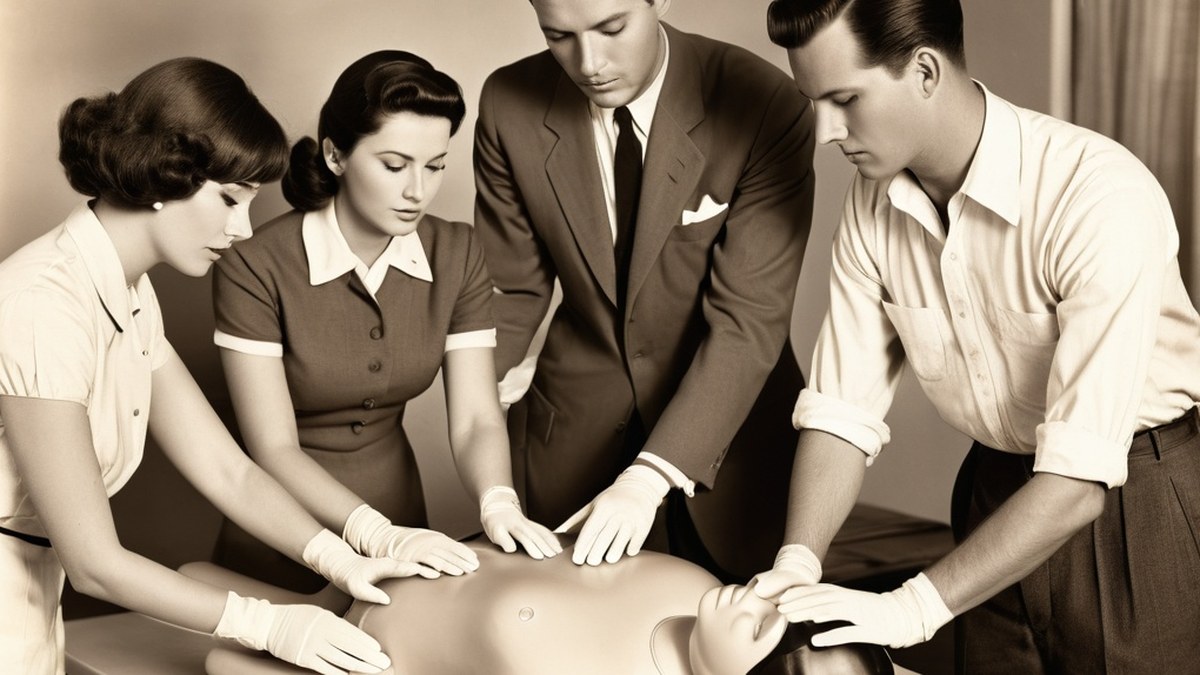
Before the mid-20th century, techniques for reviving someone whose heart had stopped were primitive and largely ineffective — various methods (including, historically, bellows to inflate the lungs, or rolling a person over a barrel) had been tried over centuries with little real success. The modern understanding came together in pieces during the 1950s and 60s: researchers including Peter Safar demonstrated that mouth-to-mouth rescue breathing could effectively ventilate a non-breathing person, while separately, researchers at Johns Hopkins demonstrated that external chest compressions could maintain enough blood circulation to keep vital organs alive without needing to open the chest surgically, as had previously been the only way to manually restart circulation. Combining these two techniques into what became known as cardiopulmonary resuscitation, alongside the parallel development of defibrillation to restart a heart's electrical rhythm, transformed cardiac arrest from an almost universally fatal event outside a hospital into a survivable one, provided someone nearby was willing and able to act quickly. From the 1960s and 70s onward, CPR training was deliberately and successfully popularized as a skill for ordinary members of the public to learn, not just medical professionals, on the basis that the first few minutes after a cardiac arrest are the most critical and a bystander is almost always present sooner than professional help can arrive.
What If Modern CPR and Resuscitation Techniques Were Never Developed?
Cardiopulmonary resuscitation — the combination of chest compressions and rescue breathing taught to millions of ordinary people worldwide — is a relatively recent medical development, formalized only in the late 1950s and 1960s. Before that, a cardiac arrest almost anywhere outside a hospital was, for practical purposes, simply fatal.
The History
How It Changed
Imagine the specific research breakthroughs that actually combined effective rescue breathing with external chest compressions in the late 1950s and early 1960s simply don't converge in the same way — perhaps the Johns Hopkins chest-compression research team pursues a different research direction, or the broader medical community remains unconvinced that external compressions could meaningfully replace surgical heart massage — leaving resuscitation science stalled at its earlier, far less effective state for decades longer.
The Initial Impact
Without an effective, teachable combination of rescue breathing and chest compressions, cardiac arrest occurring outside a hospital setting would remain what it effectively was before CPR's actual development: almost universally fatal, since the only available interventions would require advanced medical equipment and personnel essentially never present at the moment and location where a cardiac arrest actually occurs.
The Local Picture
For families and bystanders, witnessing a sudden cardiac arrest — at home, in public, during exercise — would mean genuinely having no meaningful way to help beyond calling for medical assistance and waiting, a fundamentally different and far more helpless experience than the actual modern reality where immediate bystander action measurably improves survival odds.
The Global Picture
At a public health level, the absence of widely-taught CPR would represent a significant, ongoing loss of life from a cause that modern resuscitation actually addresses directly — sudden cardiac arrest is a leading cause of death in many countries, and public health authorities would lack one of their most impactful, genuinely low-cost public health interventions, with downstream effects on how emergency medical systems, automated defibrillator placement in public spaces, and first-aid education generally developed, since all of these built directly on CPR's actual practical success.
Specific Predictions
The sections above build the case in general terms. Here's what that case actually implies, stated as concrete claims rather than hedged possibilities — still part of the thought experiment, not a verified forecast, but specific enough to agree or disagree with.
- Survival rates from out-of-hospital cardiac arrest would remain dramatically lower than actual modern rates, which — while still modest overall — represent a substantial, measurable improvement directly attributable to bystander CPR and public-access defibrillation that this scenario would lack entirely.
- Public first-aid and emergency-response training programs would likely be significantly less developed and less widely adopted generally, since CPR's demonstrable, teachable effectiveness became a major driving force behind broader public first-aid education movements that actually occurred from the 1970s onward.
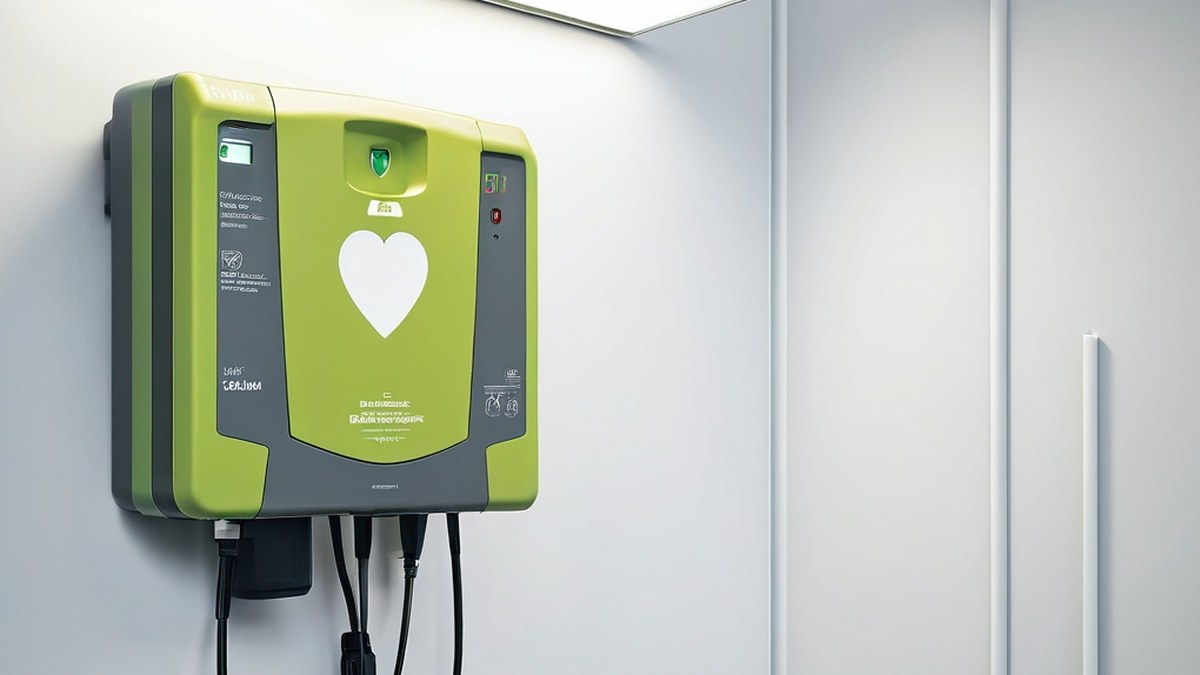
- Automated external defibrillators would likely never have been deployed widely in public spaces (airports, gyms, offices), since their value is predicated on bystanders also being able to perform effective CPR alongside defibrillation while awaiting professional help.
- Emergency medical dispatch systems would likely not have developed phone-guided CPR instruction protocols, an approach that actually depends entirely on CPR being simple and teachable enough to walk an untrained caller through during an actual emergency.
Extreme Scenarios
These push the premise furthest — the least likely, most speculative branches worth considering precisely because they show where the reasoning starts to strain.
An alternative resuscitation breakthrough eventually fills the gap, just decades later
It's plausible that effective resuscitation techniques would eventually be discovered through a different research path even without the specific 1950s-60s breakthroughs, but likely only after a meaningful delay — potentially decades — during which a very large, hard-to-fully-calculate number of people who survive cardiac arrest today due to bystander CPR would not have, representing one of the most significant, quietly cumulative death tolls of any single medical non-discovery scenario on this site.
The absence of effective bystander resuscitation reshapes public attitudes toward sudden death
In a world where witnessing a cardiac arrest genuinely offered no meaningful way to help, public and cultural attitudes toward sudden death might remain closer to a pre-modern fatalism about it being simply unpreventable in the moment, rather than the actual modern expectation — reinforced by widespread CPR training and visible survival stories — that sudden cardiac death is frequently a preventable tragedy rather than an inevitable one.
Related Scenarios

What If Blood Types Were Never Discovered?
Doctors had been attempting blood transfusions for over two centuries, with results ranging from miraculous to fatal, and no idea why. Karl Landsteiner found the answer by mixing samples of his own colleagues' blood together on glass slides and watching which combinations clumped.
Read the scenario →
What If Insulin Was Never Isolated?
Before 1921, a diagnosis of type 1 diabetes was a death sentence, usually within a year or two, managed only by near-starvation diets that briefly extended life at a terrible cost. A Toronto surgeon, a medical student, and two collaborators changed that within a matter of months.
Read the scenario →
What If Organ Transplant Rejection Had Never Been Solved?
Early organ transplant attempts almost always failed because the recipient's immune system attacked the new organ as foreign tissue. The discovery of effective immunosuppressant drugs in the mid-20th century solved this problem and made transplantation a routine, life-saving procedure. Without that breakthrough, transplant medicine would have remained a scientific curiosity rather than a mainstream treatment.
Read the scenario →