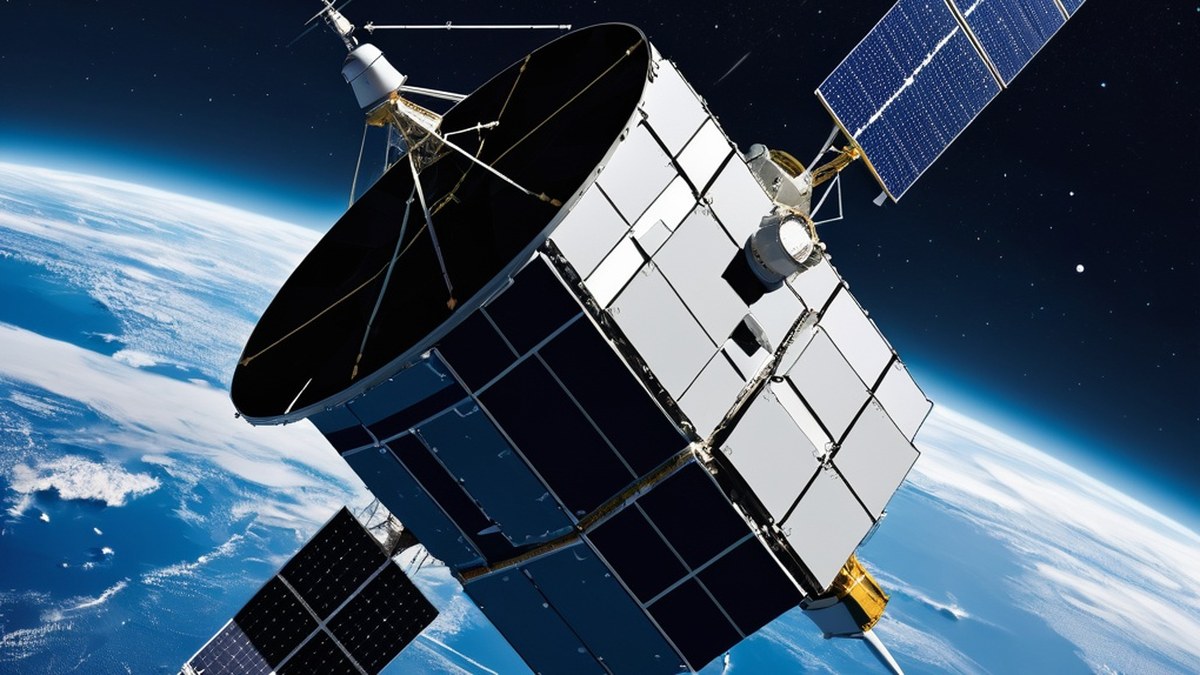
The Global Positioning System, developed by the US military and opened to civilian use in the 1980s and 1990s, works by triangulating a receiver's position from precise timing signals broadcast by a constellation of satellites. Beyond the navigation use most people are familiar with, GPS's genuinely critical, less visible role is as a timing source: its atomic-clock-synchronized signal is used to synchronize power grid switching, time-stamp financial trades down to the microsecond, synchronize cell network towers, and coordinate countless other systems that need a shared, extremely precise sense of "now" rather than location specifically. Other satellite navigation systems exist (Europe's Galileo, Russia's GLONASS, China's BeiDou), providing some redundancy, but GPS remains the most widely integrated globally, and many receivers and systems are built around it specifically rather than treating all systems as interchangeable. GPS signals are also known to be vulnerable to jamming and spoofing, and real, if localized and temporary, GPS disruptions — due to jamming in conflict zones, solar activity, or receiver failures — have already demonstrated real-world knock-on effects on shipping, aviation, and telecommunications.
What If Global GPS Signals Went Down for a Month?
GPS and the other global satellite navigation systems don't just power the blue dot on a phone map — they quietly provide the precise timing signal that underpins power grids, financial markets, and telecommunications networks worldwide. A month-long global outage would reach far beyond anyone getting lost.
Where Things Stand
What Changes
Imagine a combination of a severe solar storm disrupting satellite electronics and a simultaneous failure in ground control systems takes the GPS constellation fully offline for an entire month, rather than the brief, localized, or partial disruptions that have actually occurred.
The Initial Impact
The immediate, most visible effect would be navigation failures across shipping, aviation, and everyday consumer use, but the more serious immediate disruption would hit the invisible timing-dependent systems: power grid operators needing precise synchronization across regions, financial exchanges that timestamp trades against GPS-synchronized clocks, and telecommunications networks that rely on GPS timing to coordinate handoffs between cell towers, all needing to fail over to backup timing sources of varying quality and availability.

The Local Picture
For most individuals, the first and most obvious effect would be phone map apps failing or showing wildly inaccurate positions, affecting everything from everyday driving directions to ride-hailing and food delivery apps that depend on real-time location, while logistics and delivery companies would face serious, costly disruption trying to route vehicles and track shipments without reliable positioning.
The Global Picture
At a systemic level, aviation and maritime shipping — both of which have layered backup navigation systems but rely heavily on GPS for efficiency and precision in normal operations — would face significant disruption and slowdown, financial markets would need to rely on back-up timing synchronization of uncertain precision for high-frequency trading, and a month is long enough that systems without robust backup timing sources would start to show real, compounding failures rather than just brief, tolerable glitches.
Specific Predictions
The sections above build the case in general terms. Here's what that case actually implies, stated as concrete claims rather than hedged possibilities — still part of the thought experiment, not a verified forecast, but specific enough to agree or disagree with.
- Aviation and maritime shipping would continue operating using older backup navigation methods and extra caution, but at meaningfully reduced efficiency and with real incident risk, particularly in congested shipping lanes and airspace.
- Financial exchanges and telecommunications providers would reveal, in the post-event analysis, that their actual backup timing infrastructure was less robust and less tested than assumed, since most organizations had never needed to rely on it for a sustained month-long period before.
- Consumer-facing apps dependent on location (ride-hailing, food delivery, fitness tracking) would see significant service degradation, driving renewed public and regulatory interest in requiring multi-constellation GPS receivers that could fail over to Galileo, GLONASS, or BeiDou.
- Governments and critical infrastructure operators would accelerate investment in GPS-independent timing and backup positioning technology following the event, treating the outage as a wake-up call similar to how past infrastructure failures have driven subsequent resilience investment.

Extreme Scenarios
These push the premise furthest — the least likely, most speculative branches worth considering precisely because they show where the reasoning starts to strain.
A cascading failure in a timing-dependent system triggers a genuine infrastructure crisis
If a power grid operator's backup timing synchronization proved less reliable than assumed, a GPS outage lasting a full month could plausibly contribute to a serious regional grid synchronization failure or blackout, demonstrating a level of dependency on GPS timing that most infrastructure operators had never stress-tested at this duration, and triggering a far more urgent regulatory response to critical-infrastructure timing redundancy than a one-off brief outage ever could have.
The outage becomes the catalyst for genuine multi-system resilience
In the more constructive branch, a month is long enough to force real, lasting behavioral and technical change rather than a quick patch: accelerated adoption of multi-constellation receivers, serious investment in independent atomic-clock timing backups for critical infrastructure, and a public that comes out the other side with a much more realistic understanding of how much everyday infrastructure quietly depends on a system most people never think about.
Related Scenarios
What If a Coordinated Cyberattack Disabled Every Major Bank's Digital Systems for a Week?
Modern banking is almost entirely digital, and major banks have already suffered serious, damaging cyberattacks individually — but a genuinely coordinated attack disabling the core digital systems of multiple major banks simultaneously, rather than one institution at a time, has never actually happened.
Read the scenario →
What If a Major Earthquake Destroyed the World's Leading Semiconductor Fabrication Hub Overnight?
A remarkably large share of the world's most advanced semiconductor chips — the ones inside every smartphone, car, data center, and weapons system — are manufactured in a small number of fabrication plants concentrated in a single, seismically active region. A major earthquake severe enough to take that capacity offline for an extended period would be felt in every corner of the global economy within weeks.
Read the scenario →
What If a Major Solar Storm Knocked Out Power Grids Worldwide?
In 1859, a solar storm was strong enough to make telegraph operators' equipment spark and, in some cases, keep working after they'd disconnected the power. The entire technology it disrupted was the telegraph. A comparable storm hitting today's electricity-dependent world would be a fundamentally different kind of event.
Read the scenario →