By 216 BC, Hannibal had already spent two years campaigning in Italy, having famously crossed the Alps with his army and war elephants in 218 BC, and had already defeated Roman forces at the Trebia and Lake Trasimene. At Cannae in southern Italy, Hannibal's smaller, more tactically flexible force lured a much larger Roman army into a formation where Carthaginian cavalry could envelop it from both flanks and the rear, resulting in a near-total destruction of the Roman force — ancient sources suggest Roman casualties may have reached 50,000 to 70,000 killed in a single day, among the worst single-battle losses in military history up to that point. Despite this devastating victory, Hannibal did not march on Rome itself, instead continuing a broader strategy of trying to detach Rome's Italian allies from their loyalty to Rome and wear down Roman resolve through attrition — a strategy that ultimately failed, as Rome, remarkably, refused to negotiate peace even after Cannae, rebuilt its military strength over the following years, and eventually won the broader Second Punic War, forcing Hannibal to return to Carthage and ultimately defeating him at the Battle of Zama in 202 BC.
What If Hannibal Had Taken Rome After the Battle of Cannae?
In 216 BC, the Carthaginian general Hannibal inflicted one of the most devastating defeats in Roman military history at the Battle of Cannae, annihilating a Roman army of some 80,000 soldiers through a brilliant double-envelopment tactic. Despite this crushing victory, Hannibal chose not to march on Rome itself, a decision ancient and modern historians have debated ever since.
The History
How It Changed
Imagine Hannibal, in the immediate aftermath of Cannae, either successfully improvises or had secretly prepared the siege capability needed to actually threaten Rome's walls, and marches on the city immediately while Roman political and military leadership is still in complete disarray from the scale of the Cannae disaster — the specific window Maharbal is said to have urged him to seize.
The Initial Impact
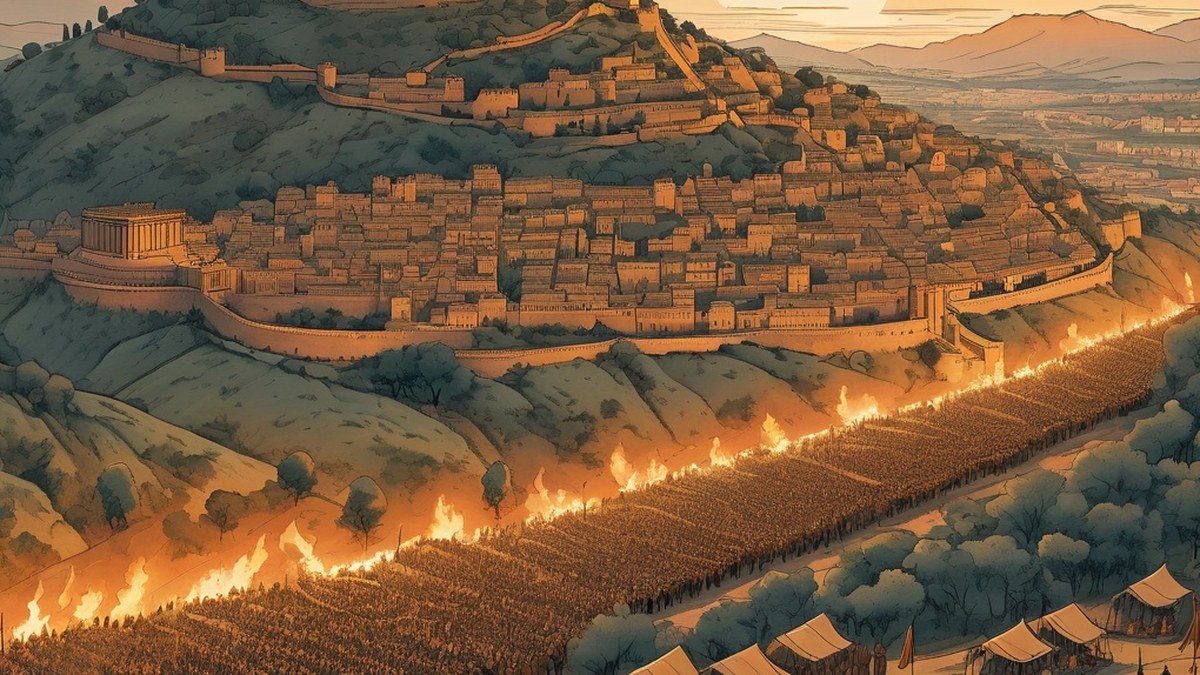
Even a successful march on Rome wouldn't necessarily have meant Hannibal could actually capture the city quickly: Rome's walls were substantial, and ancient siege warfare against a well-fortified major city typically required extensive specialized equipment and time that Hannibal's army, which had just crossed the Alps and fought a grueling Italian campaign, likely still lacked even after Cannae — meaning the most historically plausible version of this scenario involves Hannibal besieging rather than immediately capturing Rome, prolonging Roman panic and political crisis considerably beyond what actually occurred.
The Local Picture
For Rome's own population and political institutions specifically, even an unsuccessful siege attempt arriving directly on the heels of Cannae's catastrophic losses would have represented a vastly more severe crisis than anything the actual war produced — Roman historical accounts already describe genuine panic in the city after news of Cannae arrived, and a Carthaginian army actually appearing at the walls could plausibly have triggered significant internal political upheaval, possibly including challenges to the Roman Senate's authority to continue the war.
The Global Picture
At the broadest historical scale, Rome's survival and ultimate victory in the Second Punic War set the foundation for its subsequent rise to dominate the entire Mediterranean world over the following two centuries — a successfully besieged or captured Rome in 216 BC, even if Rome ultimately recovered and continued the war from elsewhere (Roman political institutions were genuinely resilient and distributed, not solely dependent on the city itself), would represent such a profound psychological and political shock that the subsequent trajectory of Roman expansion, and by extension the entire classical Mediterranean world's political development, becomes very difficult to predict with any confidence beyond the near certainty that it would look substantially different.
Specific Predictions
The sections above build the case in general terms. Here's what that case actually implies, stated as concrete claims rather than hedged possibilities — still part of the thought experiment, not a verified forecast, but specific enough to agree or disagree with.
- Rome's Italian allies, many of whom remained loyal to Rome even after Cannae in the actual timeline, would face enormously increased pressure to defect to Hannibal's side if Rome itself appeared under direct, serious threat, potentially unraveling the alliance network that Rome actually relied on to eventually recover and win the war.
- Even if Hannibal couldn't fully capture a besieged Rome, the political and psychological shock of a Carthaginian army at the city's walls would very plausibly trigger a genuine internal Roman political crisis, given how severely Roman accounts already describe the city's panic after Cannae alone.
- Carthage's own political leadership, which in the actual timeline provided Hannibal with notably limited reinforcement and support throughout his Italian campaign, might be forced to commit significantly more resources to capitalize on a successful siege, changing the broader strategic balance of the war.
- Rome's ultimate victory in the Second Punic War, while not impossible even in this scenario given Rome's demonstrated historical resilience and the eventual Roman victory at Zama in the actual timeline, would be considerably less certain and would very plausibly take a different, longer, and more costly path even if the war's ultimate outcome remained the same.
Extreme Scenarios
These push the premise furthest — the least likely, most speculative branches worth considering precisely because they show where the reasoning starts to strain.
Rome falls and the Mediterranean's political future is remade around Carthage
In the most extreme plausible version of this scenario, a successfully captured Rome — even if difficult to achieve given siege warfare's real logistical demands — could have fundamentally ended Rome's rise as a Mediterranean power at this early stage, potentially leaving Carthage as the region's dominant power for the following century or more, a genuinely different classical world in which Carthaginian rather than Roman law, language, and political institutions might have spread across the Mediterranean and shaped subsequent European history.
Rome survives even a siege through its distributed political resilience
A more historically grounded possibility, given how Roman institutions actually responded to the real Cannae disaster: Rome's political and military system was genuinely distributed across its citizen and allied manpower base rather than solely concentrated in the city itself, and Roman historical sources describe remarkable political resolve even after Cannae's actual catastrophic losses — suggesting that even a siege of Rome itself might ultimately fail to end Roman resistance, with the war simply continuing from Roman forces and allies operating elsewhere in Italy, delaying rather than preventing Rome's eventual historical recovery and victory.
Related Scenarios

What If Alan Turing Had Lived to Lead Machine Learning Research in the 1960s?
Alan Turing died in June 1954, at 41, following his 1952 prosecution for homosexuality (then a crime in Britain) and the chemical castration imposed as an alternative to prison. His 1950 paper "Computing Machinery and Intelligence" — which proposed the Turing Test and speculated seriously about machine learning — suggests a mind already moving well beyond his wartime codebreaking work toward exactly the questions AI research would spend the next seventy years pursuing.
Read the scenario →
What If Alexander the Great Had Lived Past 32?
Alexander conquered the largest empire the ancient world had yet seen before dying, likely of fever or illness, without naming a clear successor. His empire fractured into competing kingdoms within a generation — a fate that historians widely agree was a direct consequence of his death being so sudden and unplanned.
Read the scenario →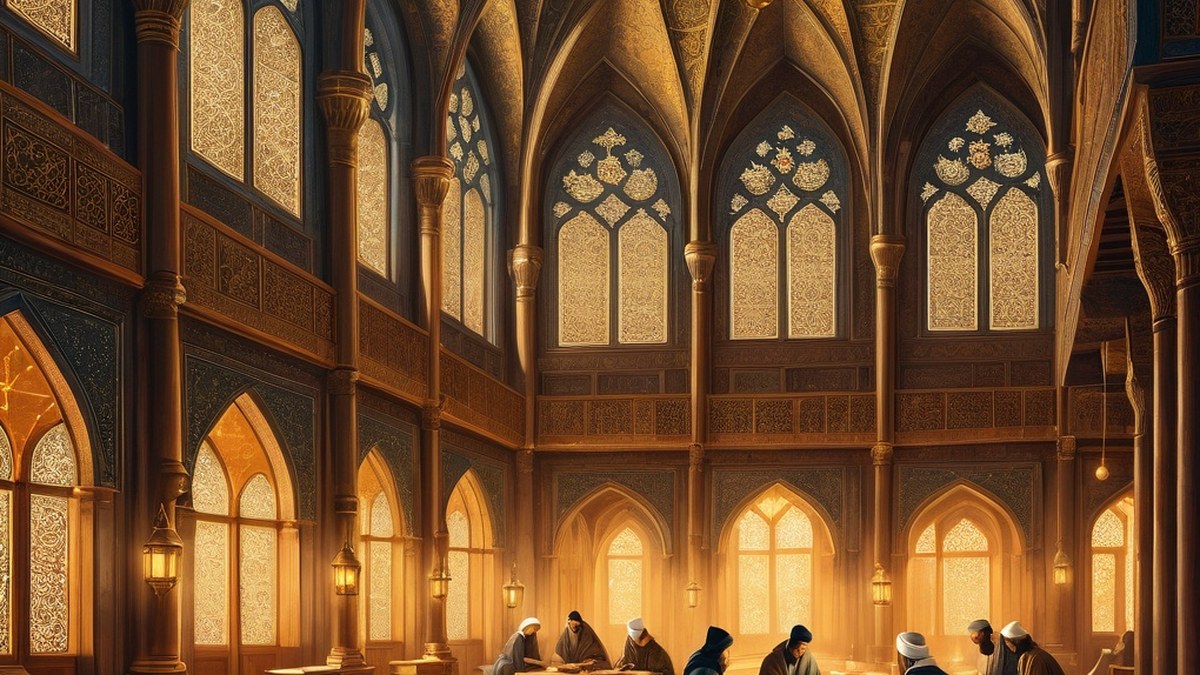
What If Baghdad's House of Wisdom Had Survived the 1258 Mongol Siege?
The House of Wisdom in Baghdad was, for several centuries, one of the greatest centers of learning in the world — a library and research institution central to the Islamic Golden Age's achievements in mathematics, astronomy, medicine, and philosophy. It was destroyed in 1258 when the Mongol army under Hulagu Khan sacked Baghdad, in a loss of accumulated knowledge historians still consider one of the most significant in human history.
Read the scenario →