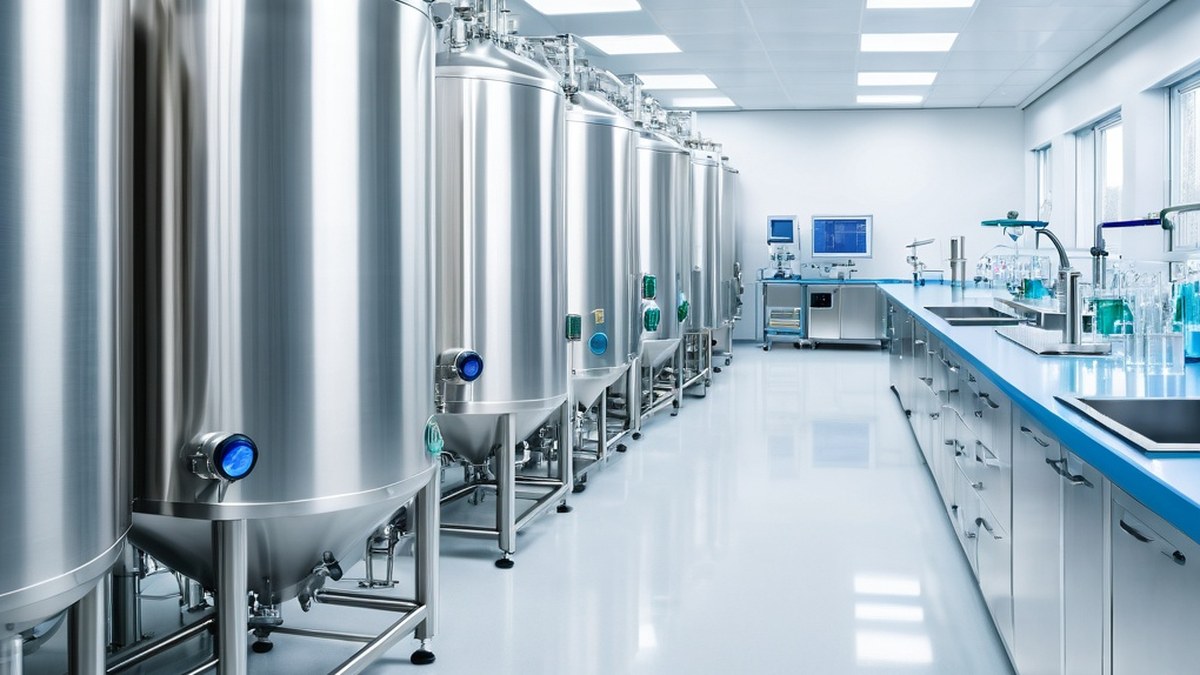
Cultivated meat production works by taking a small sample of animal cells, typically muscle stem cells, and growing them in large bioreactors using a nutrient-rich growth medium that provides the proteins, sugars, and other compounds the cells need to multiply and develop into muscle tissue, in some cases combined with plant-based scaffolding to help the tissue form a more familiar meat-like structure. Several companies have successfully brought cultivated meat products to market in small quantities, with regulatory approval secured in Singapore in 2020, the United States in 2023, and a small number of other countries since, but production costs remain dramatically higher than conventional meat, with the growth medium itself representing a particularly significant and stubborn cost driver — some estimates suggest production costs still run many times higher than conventional meat per equivalent unit, even after years of genuine technical progress reducing costs from the many thousands of dollars per pound cultivated meat cost when first demonstrated in the early 2010s.
What If Lab-Grown Meat Became Cheaper Than Traditional Meat Overnight?
Cultivated meat — real animal muscle tissue grown from cells in bioreactors rather than raised and slaughtered animals — has been commercially approved for sale in a handful of countries, but remains dramatically more expensive to produce than conventional meat, limiting it to a small, premium niche. Imagine that cost gap simply vanished tomorrow.
Where Things Stand
What Changes
Imagine a breakthrough in growth media formulation or bioreactor efficiency — the kind of genuine technical advance companies in this space are actively pursuing, just imagined here as succeeding completely and immediately — collapses cultivated meat's production cost to below conventional meat's price point literally overnight, removing the single biggest barrier that has kept cultivated meat a tiny niche product rather than a mass-market option.
The Initial Impact
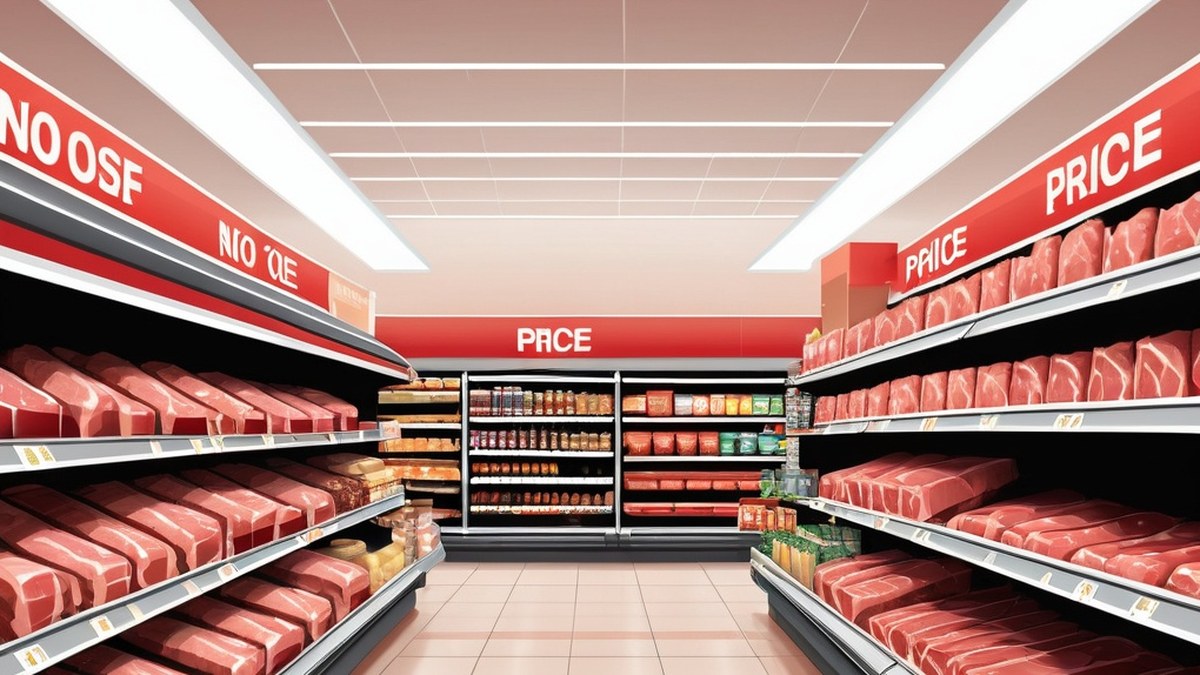
An immediate price advantage would create intense pressure on cultivated meat producers' actual production capacity, since current cultivated meat manufacturing operates at a tiny fraction of the scale needed to meaningfully supply mainstream grocery and restaurant demand — meaning even with cost solved, a genuine supply crunch and rapid capital investment race to build bioreactor capacity would likely dominate the first months and years of this scenario, rather than an instant replacement of conventional meat on store shelves.
The Local Picture
For conventional livestock farmers and the broader meat industry supply chain, a sudden, genuine cost-competitive alternative would represent an existential and immediate economic threat, particularly for the parts of the industry most exposed to commodity-style competition on price alone, while higher-end, specialty, and culturally or religiously significant traditional meat products would likely retain dedicated demand regardless of cultivated meat's price, similar to how other food categories have seen lower-cost alternatives capture mass-market share while premium traditional versions persist.
The Global Picture
At a global level, a genuinely cost-competitive cultivated meat industry would have major implications for agricultural land use, greenhouse gas emissions, and global food security, given how much land, water, and feed crop production is currently devoted to livestock farming worldwide — proponents of cultivated meat have long argued its environmental footprint could be dramatically smaller at scale, and a sudden cost breakthrough would be the fastest possible way to actually test that claim at a meaningful global scale, though real-world adoption would still depend heavily on consumer acceptance, regulatory approval in additional major markets, and the sheer physical challenge of scaling bioreactor manufacturing capacity to anything approaching current global meat consumption volumes.
Specific Predictions
The sections above build the case in general terms. Here's what that case actually implies, stated as concrete claims rather than hedged possibilities — still part of the thought experiment, not a verified forecast, but specific enough to agree or disagree with.
- Cultivated meat production capacity would become the binding constraint almost immediately, triggering a major capital investment race to build bioreactor manufacturing facilities, likely taking several years even with unlimited willingness to invest, given the physical scale-up challenge involved.
- Conventional livestock commodity markets (particularly for chicken and pork, where cultivated alternatives are furthest along) would see significant, rapid price and demand pressure, while premium and culturally specific meat products would likely retain more resilient demand.
- Consumer acceptance, rather than price, would quickly become the primary remaining barrier to adoption in many markets, given genuine, well-documented hesitancy toward lab-grown food that exists independently of cost considerations.
- Regulatory approval processes in major markets that haven't yet approved cultivated meat (including the European Union as of this writing) would face intense new pressure and scrutiny, likely accelerating review timelines given the scale of economic and environmental stakes suddenly in play.
Extreme Scenarios
These push the premise furthest — the least likely, most speculative branches worth considering precisely because they show where the reasoning starts to strain.
Cultivated meat achieves majority market share within a decade, reshaping global agriculture
If production capacity scales successfully and consumer acceptance grows at anything close to the pace seen for other major food technology shifts, cultivated meat could plausibly capture a majority share of global meat consumption within a decade of this cost breakthrough, triggering one of the most significant transformations in global agricultural land use in modern history, freeing vast areas currently devoted to livestock and feed crop production for other uses.
Consumer resistance and supply bottlenecks keep adoption surprisingly slow despite the price advantage
A more sobering possibility: food preferences are notoriously resistant to pure price-based disruption in ways that don't always track economic logic — genuine, documented consumer hesitancy about lab-grown food, combined with the real physical difficulty of scaling bioreactor production fast enough to matter, could mean cultivated meat's actual market share grows much more slowly than its price advantage alone would predict, with the technology remaining meaningfully cheaper for years while mainstream adoption lags well behind.
Related Scenarios

What If It Never Rained Again?
Every major civilization in human history has depended on rainfall arriving somewhere, eventually, to refill the rivers, aquifers, and reservoirs everything else is built on. Imagine that stopped everywhere, permanently, starting today.
Read the scenario →
What If a Commercially Viable Fusion Reactor Came Online Tomorrow?
Nuclear fusion — the reaction that powers the sun, capable in theory of producing enormous amounts of clean energy from abundant fuel with no long-lived radioactive waste — has been pursued as a practical power source for decades, with major experimental reactors demonstrating real scientific progress but no facility yet producing more usable energy than it consumes on a sustained, commercially practical basis. Imagine that breakthrough simply arrived tomorrow, fully solved.
Read the scenario →
What If a Major City Genuinely Ran Out of Water?
Cape Town came close enough in 2018 that the city had an actual date on the calendar — 'Day Zero' — for when the taps would be switched off entirely. A combination of severe drought, rapid population growth, and aggressive last-minute conservation measures meant the date kept moving. It's a real scenario that has already almost happened, not a hypothetical one.
Read the scenario →