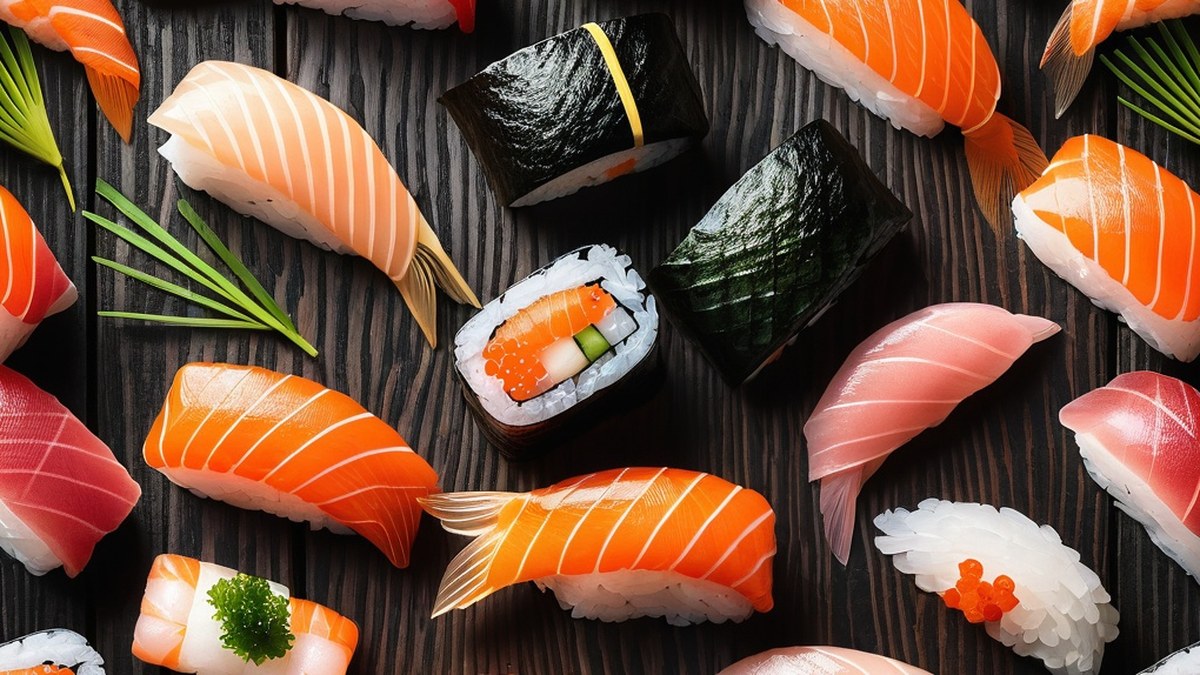
Sushi in its modern form developed in Japan over centuries, with the fast, vinegared-rice-and-fresh-fish style familiar today (nigiri) emerging in early 19th-century Edo (Tokyo) as a kind of fast food. For most of its history, it remained a specifically Japanese dish, essentially unknown outside Japan and Japanese diaspora communities. Its global spread is a genuinely recent, well-documented phenomenon: Japanese restaurants began appearing in US cities (particularly Los Angeles) in meaningful numbers from the 1960s onward, and a widely-cited specific innovation — the California roll, created in early-1970s Los Angeles specifically to appeal to Western customers wary of raw fish and seaweed, using avocado, cooked crab, and rice-outside rolling — is often credited as the crucial bridge that made sushi approachable to a mainstream American audience for the first time. From that foothold, sushi's popularity expanded through the 1980s and 1990s alongside a broader Western fascination with Japanese culture and design, eventually becoming the thoroughly globalized, often significantly adapted food category familiar today, with huge regional variation far removed from traditional Japanese preparation.
What If Sushi Had Never Spread Beyond Japan?
Sushi is now one of the most globally recognized food categories in the world, served everywhere from high-end omakase counters to supermarket refrigerated cases in cities with no historical connection to Japan at all. That global spread was never inevitable — it depended on a specific, fairly recent chain of events.
The History
How It Changed
Imagine the specific postwar conditions that actually launched sushi's global spread — the concentration of Japanese restaurants and chefs in 1960s-70s Los Angeles, and crucially the invention and popularization of the California roll as a palatable bridge dish for unfamiliar Western diners — simply don't happen in the same way, leaving sushi known internationally mainly as an exotic curiosity rather than an actual mainstream food category.
The Initial Impact
Without an accessible bridge dish specifically designed to overcome Western unfamiliarity with raw fish and seaweed, Japanese restaurants outside Japan would likely have remained a smaller, more specialized niche serving existing Japanese diaspora communities and a narrow band of culinarily adventurous diners, rather than becoming the mainstream phenomenon that actually occurred.
The Local Picture
For most people outside Japan and its diaspora communities, sushi would likely be something encountered rarely if at all — known by reputation as a distinctively Japanese food, perhaps tried once on a trip to Japan or at a rare specialty restaurant, rather than a completely normalized lunch option available at supermarkets, mall food courts, and conveyor-belt chains in cities with no historical connection to Japan whatsoever.
The Global Picture
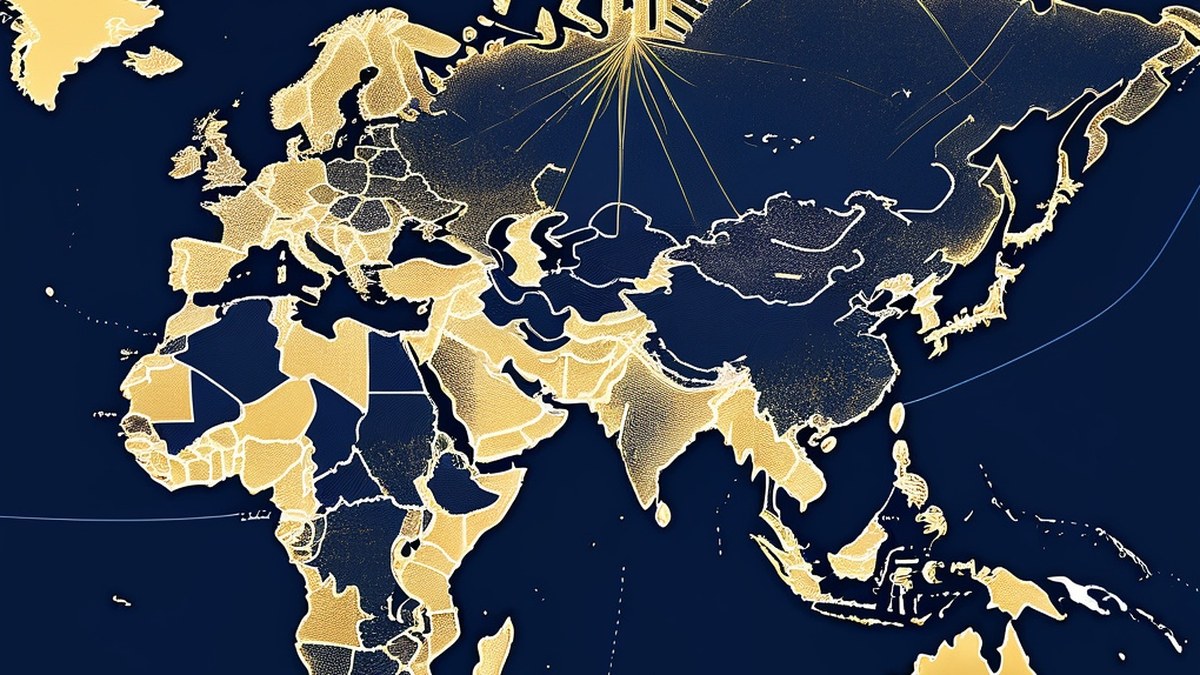
At a broader level, the absence of sushi's global spread would represent a genuinely different trajectory for how Japanese culture more broadly integrated into global popular culture — sushi's mainstream familiarity has arguably served as a significant, approachable entry point to broader Western interest in Japanese food, design, and media more generally, and its absence could plausibly have left that broader cultural exchange happening more slowly or through different channels (anime and manga, likely, rather than food) than actually occurred.
Specific Predictions
The sections above build the case in general terms. Here's what that case actually implies, stated as concrete claims rather than hedged possibilities — still part of the thought experiment, not a verified forecast, but specific enough to agree or disagree with.
- Japanese restaurants outside Japan would likely remain a smaller, more specialized category serving existing diaspora communities and a narrower band of adventurous diners, rather than becoming a mainstream, ubiquitous dining and grocery category.
- The absence of a westernized bridge dish like the California roll would likely mean raw fish and seaweed-based cuisine generally faced a persistently higher cultural barrier to entry outside East Asia, without an equivalent substitute innovation emerging to replace that specific role.
- The global sushi supply chain that actually developed — driving significant commercial demand for bluefin tuna and other specific fish species worldwide — would likely not exist at anything like its actual scale, with measurably different impact on some global fish stocks.
- Japanese cultural influence on global food culture would likely have developed through different channels (ramen, which has its own separate adoption story, ramen shops, or Japanese-influenced fusion cuisine) rather than sushi specifically serving as the most visible, mainstream ambassador dish.
Extreme Scenarios
These push the premise furthest — the least likely, most speculative branches worth considering precisely because they show where the reasoning starts to strain.
A different cuisine becomes the defining global ambassador for Japanese food culture
Without sushi's specific path to global mainstream adoption, it's plausible that a different Japanese dish — ramen, with its own separate and genuinely large global expansion in recent decades, or a Japanese-Western fusion cuisine — could have become the primary global entry point to Japanese food culture instead, producing a recognizably different, though still significant, pattern of Japanese culinary influence worldwide.
Reduced global demand meaningfully changes fish stock and ocean conservation outcomes
Sushi's actual global popularity drove a substantial, well-documented increase in global demand for bluefin tuna and other specific fish species, contributing to serious stock depletion and conservation concern for several species; without that demand driver existing at its actual scale, some of those specific fish populations could plausibly be in measurably better condition today, a genuinely significant, if narrow, ecological consequence of a single cuisine's global spread never happening.
Related Scenarios

What If Chocolate Had Never Left the Americas?
Cacao was a Mesoamerican crop and a sacred, bitter drink for well over a thousand years before Spanish colonization carried it to Europe. Remove that transfer, and an entire global industry — and one of the world's most universal comfort foods — never crosses the Atlantic.
Read the scenario →
What If Coffee Had Never Spread Beyond Ethiopia and Arabia?
For centuries, coffee cultivation and the secret of how to prepare it were closely guarded within the Arabian Peninsula. A single act of smuggling — beans reportedly strapped to a pilgrim's body — is credited with breaking that monopoly and starting coffee's spread around the world.
Read the scenario →
What If the Potato Had Never Left South America?
A single crop, domesticated in the Andes thousands of years ago, became so central to European population growth and Irish subsistence farming that its catastrophic mid-19th-century failure in Ireland killed roughly a million people and drove a million more to emigrate.
Read the scenario →