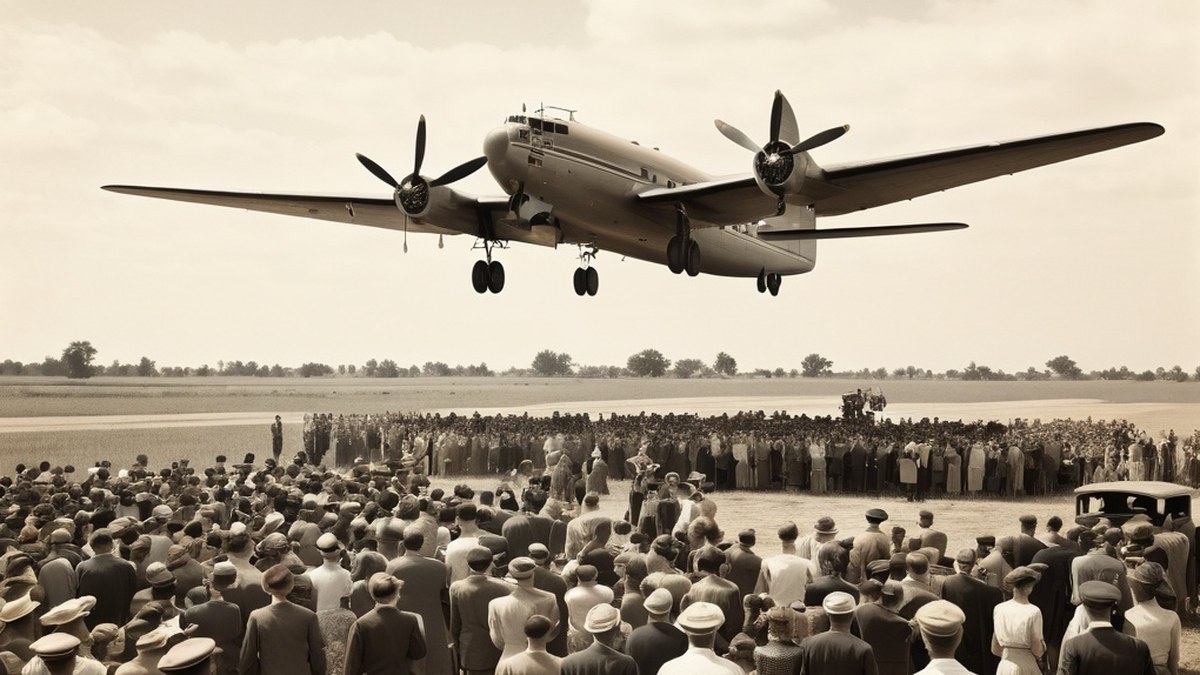
In June 1948, the Soviet Union blockaded all land, rail, and water access to West Berlin, which sat deep inside Soviet-occupied East Germany, in response to Western currency reforms and broader tensions over Germany's postwar status. West Berlin's roughly two million residents faced the prospect of starvation and the city's effective absorption into Soviet control. Rather than abandon the city or attempt to force open land access militarily (which risked direct war with the Soviet Union), the Western Allies — principally the United States and Britain — launched an airlift, flying in food, coal, and supplies around the clock using a narrow set of approved air corridors the Soviets could not legally block without an overt act of war. The operation, known as Operation Vittles to American crews, eventually sustained the city for nearly eleven months, delivering over two million tons of supplies via hundreds of thousands of flights at its peak, an extraordinary logistical achievement given contemporary aircraft capacity and the harsh conditions (including a severe winter) crews operated under. The Soviets lifted the blockade in May 1949, widely regarded as a clear Western victory that demonstrated resolve without direct conflict, and the episode significantly shaped the formation of NATO and the permanent division of Germany that followed shortly after.
What If the 1948 Berlin Airlift Had Failed?
When the Soviet Union blockaded all land and water routes into West Berlin in 1948, the Western Allies responded with an enormous, sustained airlift rather than military confrontation or abandonment of the city. Its success is often cited as one of the Cold War's defining early moments — but a sustained airlift of that scale was a genuinely difficult logistical undertaking that could plausibly have failed.
The History
How It Changed
Imagine a combination of a harsher-than-actual winter further straining already-stretched supply logistics, a series of serious aircraft accidents undermining political and public confidence in the operation's safety and sustainability, and slower-than-actual scaling of the airlift's delivery capacity leads Western publics and governments to conclude, within the first few months, that the airlift cannot be sustained.
The Initial Impact
Facing a failing airlift, Western governments would confront an agonizing choice between two bad options actually avoided in real history: attempting to force open land access to Berlin militarily, risking direct armed conflict with Soviet forces, or accepting the blockade's success and effectively ceding West Berlin to Soviet control, a profound and immediate blow to Western credibility at the very start of the Cold War.

The Local Picture
For West Berlin's roughly two million residents, a failed airlift would mean a genuine humanitarian crisis — severe food and fuel shortages through a harsh winter — followed by whatever political outcome followed, whether a desperate last-minute negotiated settlement, a dangerous military confrontation, or Soviet absorption of the city, any of which would represent a far harsher and more dangerous outcome than the actual, difficult but ultimately successful year the city's population experienced.
The Global Picture
At a broader level, an early, visible Western failure to protect an isolated democratic enclave against Soviet pressure would likely have had serious, lasting consequences for the credibility of Western commitments throughout the emerging Cold War, plausibly weakening the political momentum that actually led to NATO's formation the following year and emboldening further Soviet pressure on other contested areas in the following years, at a moment when the broader Cold War's shape was still very much being established.
Specific Predictions
The sections above build the case in general terms. Here's what that case actually implies, stated as concrete claims rather than hedged possibilities — still part of the thought experiment, not a verified forecast, but specific enough to agree or disagree with.
- A failed or abandoned airlift would deal a severe blow to American and British credibility at the formative moment of the Cold War, plausibly weakening the political coalition that actually formed NATO in 1949 or delaying its establishment.
- West Berlin would likely either fall under effective Soviet control or become the site of a direct, dangerous military confrontation between Western and Soviet forces, a far more volatile outcome than the actual peaceful, if tense, resolution.
- Soviet leadership would likely be emboldened to apply similar pressure tactics against other contested postwar territories, having demonstrated that determined pressure could succeed against Western resolve.
- West German public opinion and political alignment would likely shift significantly, given how directly the airlift's actual success shaped West German trust in Western commitment to its security during the critical early postwar years.
Extreme Scenarios
These push the premise furthest — the least likely, most speculative branches worth considering precisely because they show where the reasoning starts to strain.
A failed airlift triggers a direct military confrontation with the Soviet Union
If Western governments chose to force open land access militarily rather than accept Berlin's loss, the result could plausibly have been a direct, armed confrontation between Western and Soviet forces in occupied Germany barely three years after the end of the Second World War — a scenario with genuinely serious potential to escalate into a far larger conflict, at a moment when neither side yet had the mutual nuclear deterrence that later helped keep Cold War confrontations from escalating to direct war.
West Berlin's loss reshapes the entire subsequent Cold War order
A Soviet-controlled Berlin, rather than the divided city that actually persisted as a potent Cold War symbol for over four decades, would have removed one of the most visible, enduring symbols of the Cold War's ideological divide — the Berlin Wall as actually built in 1961 would have had no divided city to bisect — plausibly producing a meaningfully different Cold War narrative and set of flashpoints over the following decades.
Related Scenarios
What If the Marshall Plan Had Never Been Implemented?
After the Second World War, the United States committed an enormous sum to rebuilding Western European economies through the Marshall Plan, a decision widely credited with Western Europe's remarkably fast postwar recovery and its political alignment with the West through the Cold War. That level of American commitment to rebuilding former allies and former enemies alike was a genuinely contested political choice, not an inevitability.
Read the scenario →
What If a Soviet Computer Scientist Had Defected to the West With a Working AI Prototype During the Cold War?
Cold War defections of Soviet scientists, engineers, and intelligence officers were a real and recurring feature of the era, and Soviet cybernetics research — including Viktor Glushkov's genuinely ambitious national computing work — was more sophisticated than many in the West assumed at the time. A defection specifically bringing working machine-learning research westward, rather than the weapons or intelligence secrets more commonly associated with Cold War defections, never occurred.
Read the scenario →
What If South Vietnam Had Survived the Fall of Saigon?
On April 30, 1975, North Vietnamese forces captured Saigon, the capital of South Vietnam, ending the Vietnam War with a complete communist victory and the reunification of Vietnam under Hanoi's rule. The United States had withdrawn its combat troops two years earlier and, facing its own political exhaustion with the war, declined to intervene as South Vietnam collapsed.
Read the scenario →