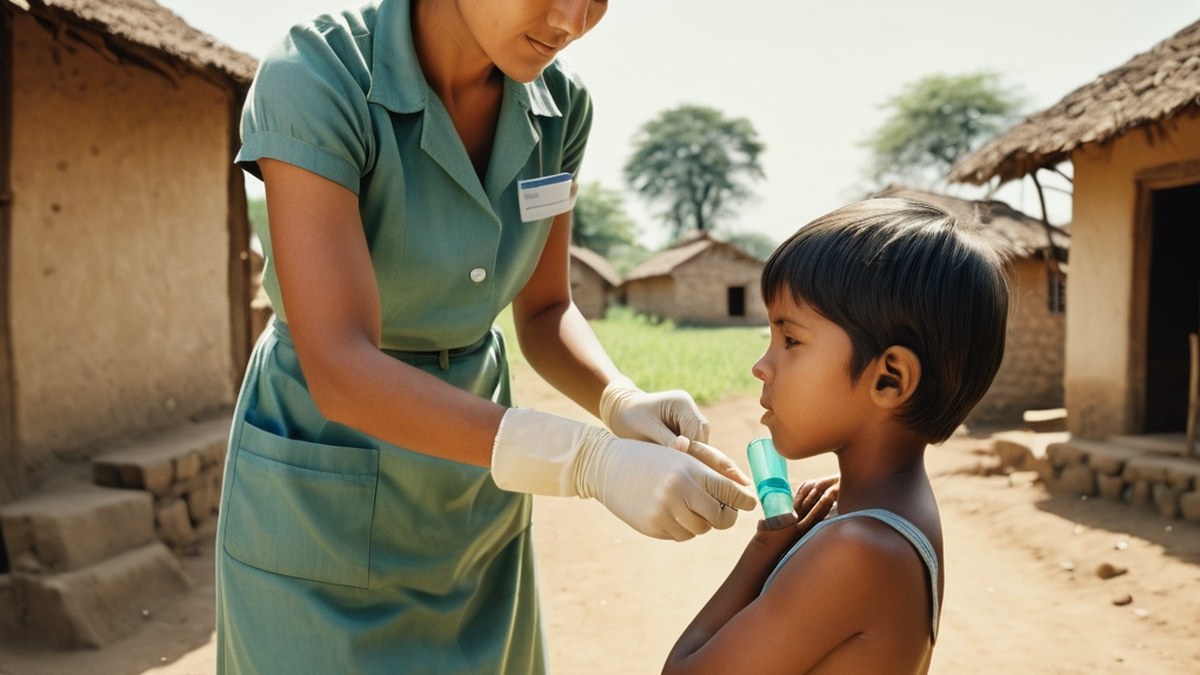
Smallpox had killed and disfigured people for thousands of years before Edward Jenner's 1796 discovery of vaccination provided the first real tool against it, but a vaccine alone wasn't enough to eliminate the disease globally — that required a coordinated, sustained, worldwide campaign of vaccination and, crucially, active disease surveillance to identify and contain outbreaks before they spread. The WHO's Intensified Eradication Program, launched in 1967, pursued a strategy of "ring vaccination" — rapidly vaccinating everyone in contact with a confirmed case and their surrounding community, rather than attempting to vaccinate entire populations — which proved more practically achievable in resource-constrained settings and across the enormous logistical challenge of operating in remote areas, conflict zones, and countries on opposite sides of Cold War political divisions. The campaign faced genuinely serious obstacles throughout: civil conflicts in several countries where smallpox remained endemic, chronic funding and political support challenges, and the sheer logistical difficulty of maintaining vaccine cold chains and surveillance networks across extremely difficult terrain and infrastructure. The last naturally occurring case was recorded in Somalia in 1977, and the WHO's 1980 declaration of global eradication followed extensive verification. It remains the only human disease ever fully eradicated, a status that took the subsequent, similarly ambitious polio eradication campaign (still not fully complete as of the 2020s) to even attempt to replicate.
What If the Global Smallpox Eradication Campaign Had Failed?
In 1980, the World Health Organization declared smallpox eradicated worldwide, the only human infectious disease ever fully eliminated through deliberate global effort. That campaign, coordinated across Cold War political divides and carried out in some of the most difficult operating environments in the world, was a genuinely difficult undertaking that came close to failure more than once.
The History
How It Changed
Imagine one of the campaign's genuinely close calls — civil conflict disrupting vaccination and surveillance efforts in a remaining endemic country, a sustained funding or political-support collapse among contributing nations, or a significant setback in the ring-vaccination strategy's effectiveness against a particularly difficult outbreak — tips the campaign into failure in the mid-to-late 1970s, leaving pockets of endemic smallpox transmission that the campaign is never able to fully extinguish.
The Initial Impact
A failed eradication campaign wouldn't simply mean smallpox persisting at its pre-campaign levels — it would mean an enormous global public health and financial investment producing a demoralizing, incomplete result, undermining international confidence in disease eradication as an achievable goal at precisely the moment later efforts (against polio, and conceivably other diseases) would need that confidence and institutional momentum to even be attempted.

The Local Picture
For people in regions where endemic transmission persisted, this would mean continuing to live with smallpox's genuinely severe risks — historically a disease with roughly a 30% fatality rate among the unvaccinated and significant rates of permanent scarring and blindness among survivors — as an ongoing reality rather than history, likely requiring continued, costly, indefinite vaccination programs rather than the complete freedom from the disease that eradication actually achieved.
The Global Picture
At a broader level, a failed smallpox eradication campaign would likely have had a chilling effect on the entire subsequent field of global disease eradication efforts — the polio eradication campaign launched in 1988, and later efforts against diseases like Guinea worm, drew direct institutional confidence and strategic lessons from smallpox's actual success, and their absence or much-delayed, more cautious pursuit could plausibly have left several other eradicable diseases still endemic in parts of the world today that are actually free of them.
Specific Predictions
The sections above build the case in general terms. Here's what that case actually implies, stated as concrete claims rather than hedged possibilities — still part of the thought experiment, not a verified forecast, but specific enough to agree or disagree with.
- Continuing endemic smallpox transmission in one or more regions would require indefinite, costly ongoing vaccination programs rather than the complete, one-time eradication actually achieved, with the disease's genuinely severe mortality and disfigurement risks remaining an ongoing reality rather than history.
- The subsequent polio eradication campaign, launched in 1988 directly building on smallpox eradication's institutional model and demonstrated feasibility, would likely be delayed, more cautiously scoped, or abandoned, given the direct confidence and strategic lessons it actually drew from smallpox's success.
- International public health funding and political support for ambitious, expensive global eradication campaigns generally would likely be measurably reduced for a generation, given how significantly smallpox's actual success is cited as proof-of-concept for the entire eradication approach.
- Routine smallpox vaccination would likely need to continue indefinitely in at-risk regions and potentially more broadly as a precaution, rather than being discontinued worldwide as actually occurred after 1980, representing an ongoing public health cost and logistical burden that the actual eradication fully eliminated.
Extreme Scenarios
These push the premise furthest — the least likely, most speculative branches worth considering precisely because they show where the reasoning starts to strain.
Endemic smallpox persists into the present day in some regions
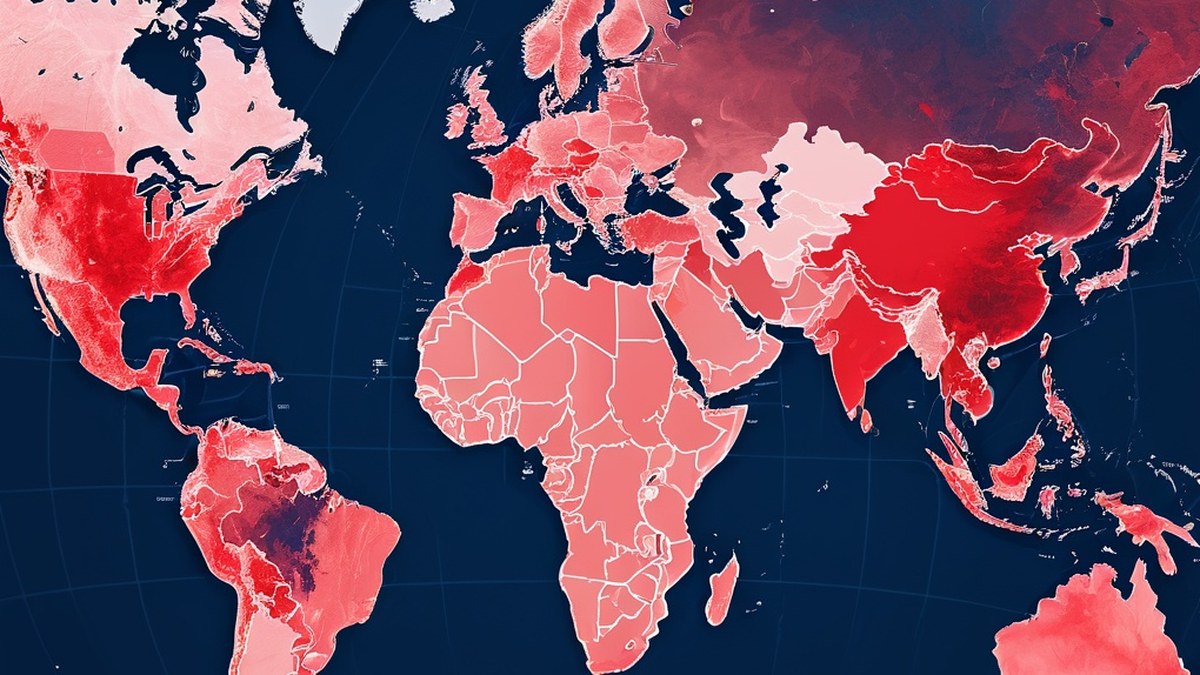
If the eradication campaign failed and was never successfully relaunched, it's plausible that smallpox could remain endemic in some parts of the world even today, continuing to kill and disfigure people in affected regions decades after the disease actually became a subject for history books and biosecurity laboratories rather than an ongoing lived reality anywhere in the world.
The failure permanently narrows ambition in global public health
Beyond smallpox itself, a genuinely demoralizing failure of the era's most ambitious global health campaign could plausibly have produced a lasting, institution-wide shift toward more modest, incremental public health goals rather than ambitious full-eradication campaigns, meaningfully changing the trajectory of global health policy and investment for decades afterward, well beyond smallpox's own specific history.
Related Scenarios

What If Blood Types Were Never Discovered?
Doctors had been attempting blood transfusions for over two centuries, with results ranging from miraculous to fatal, and no idea why. Karl Landsteiner found the answer by mixing samples of his own colleagues' blood together on glass slides and watching which combinations clumped.
Read the scenario →
What If Insulin Was Never Isolated?
Before 1921, a diagnosis of type 1 diabetes was a death sentence, usually within a year or two, managed only by near-starvation diets that briefly extended life at a terrible cost. A Toronto surgeon, a medical student, and two collaborators changed that within a matter of months.
Read the scenario →
What If Penicillin Was Never Discovered?
Alexander Fleming found penicillin because he left a window open and a petri dish uncovered before going on holiday. Without that accident, the entire modern era of treatable bacterial infection is delayed — and an untold number of people who lived, in our timeline, don't.
Read the scenario →