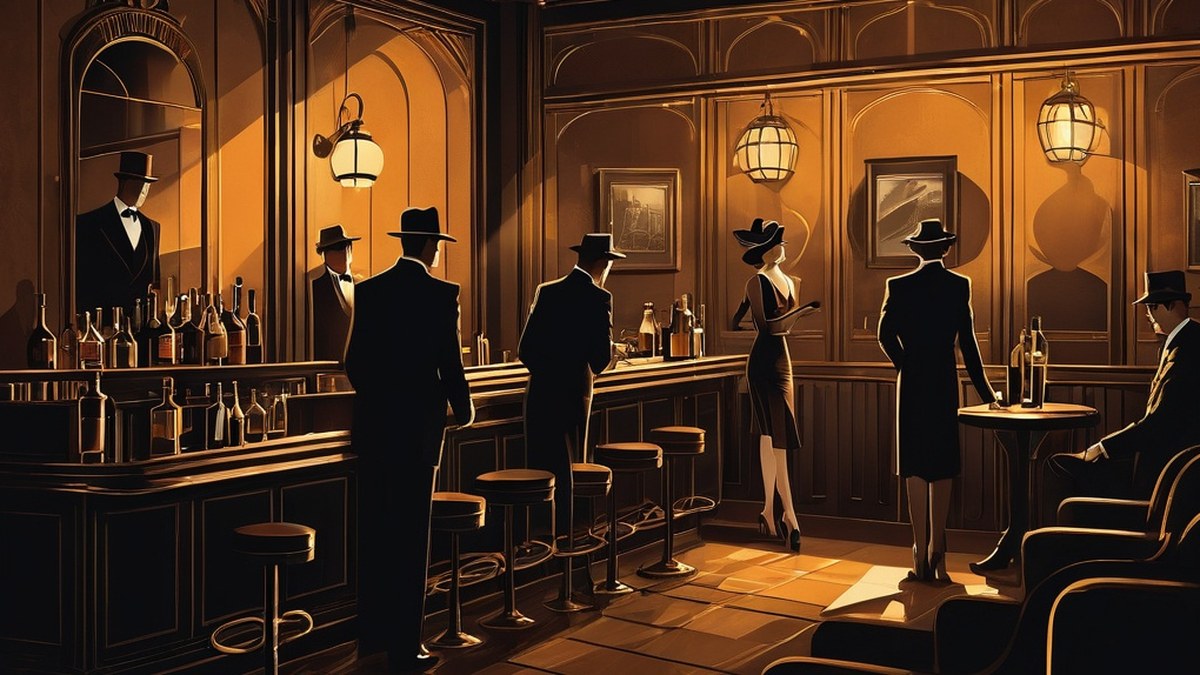
Prohibition, enacted through the 18th Amendment in 1920, banned the manufacture, sale, and transportation of alcoholic beverages nationwide. It produced a massive, lucrative black market almost immediately, financing the rise of organized crime figures like Al Capone and fueling widespread urban police and political corruption as officials were bribed to look the other way. By the early 1930s, enforcement had become widely seen as a failure, and the Great Depression added a powerful new argument for repeal: legalizing alcohol again would restore tax revenue and create jobs at a moment when the federal government badly needed both. The 21st Amendment, repealing Prohibition, was ratified in 1933 under Franklin D. Roosevelt, driven by this combination of economic pressure and accumulated public disdain for a law that had proven effectively unenforceable.
What If US Prohibition Had Never Been Repealed?
The 18th Amendment banned the manufacture, sale, and transport of alcohol across the United States starting in 1920, fueling a massive black market, the rise of organized crime figures like Al Capone, and widespread public contempt for an unenforceable law. The 21st Amendment repealed it in 1933, driven partly by Depression-era desire for tax revenue and jobs and partly by exhaustion with enforcement failures and crime. That repeal was a political choice, not an inevitability.
The History
How It Changed
Imagine the political coalition favoring repeal in the early 1930s — rural, Protestant, temperance-aligned interests that had driven Prohibition into law in the first place — remains strong enough, or Depression-era politics unfolds differently enough, that the 21st Amendment fails to gain ratification, and Prohibition continues legally in force through the rest of the 1930s and beyond.
The Initial Impact
The black market that had already flourished through the 1920s deepens further during the Depression, as organized crime remains the dominant supplier of alcohol rather than being undercut by legal production returning — meaning the economic hardship of the 1930s plays out alongside, rather than after, Prohibition's enforcement problems, compounding both.
The Local Picture
In cities, speakeasy culture and organized crime's grip on alcohol supply, policing, and local politics become even more deeply entrenched than they already were, extending for years longer than in actual history. In rural, genuinely 'dry' communities, the law continues working roughly as originally intended, with legal alcohol remaining rare — meaning the gap between how Prohibition functions in cities versus the countryside widens rather than closing.
The Global Picture
The federal and state governments lose Depression-era and wartime tax revenue that repeal actually provided in 1933, plausibly affecting New Deal and war-financing options at the margins. Organized crime networks built on bootlegging profits and infrastructure have both the continued revenue and the extra years to diversify further into other illegal enterprises — gambling, narcotics, labor racketeering — with knock-on effects on mid-20th-century American organized crime reaching further than they actually did, since in real history repeal removed alcohol specifically as the movement's core revenue source years earlier.
Specific Predictions
The sections above build the case in general terms. Here's what that case actually implies, stated as concrete claims rather than hedged possibilities — still part of the thought experiment, not a verified forecast, but specific enough to agree or disagree with.
- Organized crime groups built around Prohibition-era bootlegging would remain significantly larger, wealthier, and more politically entrenched through the mid-20th century than in actual history, where 1933's repeal removed their primary revenue source.
- Mounting lost tax revenue and enforcement costs during the Depression would keep generating strong repeal pressure, meaning Prohibition most plausibly survives only a few years longer rather than lasting indefinitely — eventual repeal, just delayed, is the more likely outcome than permanent Prohibition.
- Public contempt for an unenforceable law, already widespread by the late 1920s, would deepen further, likely producing an even more pronounced culture of open disregard for federal law by the time repeal does eventually happen.
- American drinking culture after an eventual, later repeal would look different from the actual post-1933 norm — a longer dry period might produce a more dramatic cultural 'return' to drinking once it finally arrives, echoing the kind of rapid cultural shift seen after other prolonged periods of social restriction.
Extreme Scenarios
These push the premise furthest — the least likely, most speculative branches worth considering precisely because they show where the reasoning starts to strain.
Prohibition survives into the television era
In the most extreme branch, Prohibition's legal survival stretches for decades, interacting strangely with 1950s and 1960s American culture — organized crime, flush with a much longer uninterrupted revenue base, diversifies even more thoroughly into labor unions, casinos, and other enterprises, echoing patterns that did emerge historically but at a larger and more entrenched scale.
A patchwork repeal emerges instead of a clean national one
Rather than Prohibition ending through one clear national amendment the way it actually did, individual states begin repealing their own enforcement or simply declining to prosecute well before any federal change, producing a fragmented, legally murky alcohol landscape where legality effectively depends on which state you're in, long before the federal law itself formally changes.
Related Scenarios
What If Esperanto Had Become the World's Standard Second Language?
L. L. Zamenhof created Esperanto in 1887 as a deliberately simple, politically neutral international language. It gained a genuine following and even came close to institutional adoption: a 1922 proposal to the League of Nations for member states to teach it in schools as an international second language was blocked, largely by France, which saw it as a threat to French's status as the language of diplomacy. English went on to become the de facto global lingua franca after 1945, driven by American economic, military, and cultural dominance.
Read the scenario →
What If Estonia's 1990s Digital Government Push Had Produced the First AI-Run State?
After regaining independence from the Soviet Union in 1991, Estonia rebuilt its government infrastructure from scratch, choosing to digitise rather than replicate the paper-based bureaucracy of its neighbours — a real, well-documented decision that produced X-Road, digital ID, and eventually e-Residency, making Estonia the world's most thoroughly digitised state government. A version of that same founding choice pointed toward AI-driven administration, not just digital administration, raises a genuinely different question.
Read the scenario →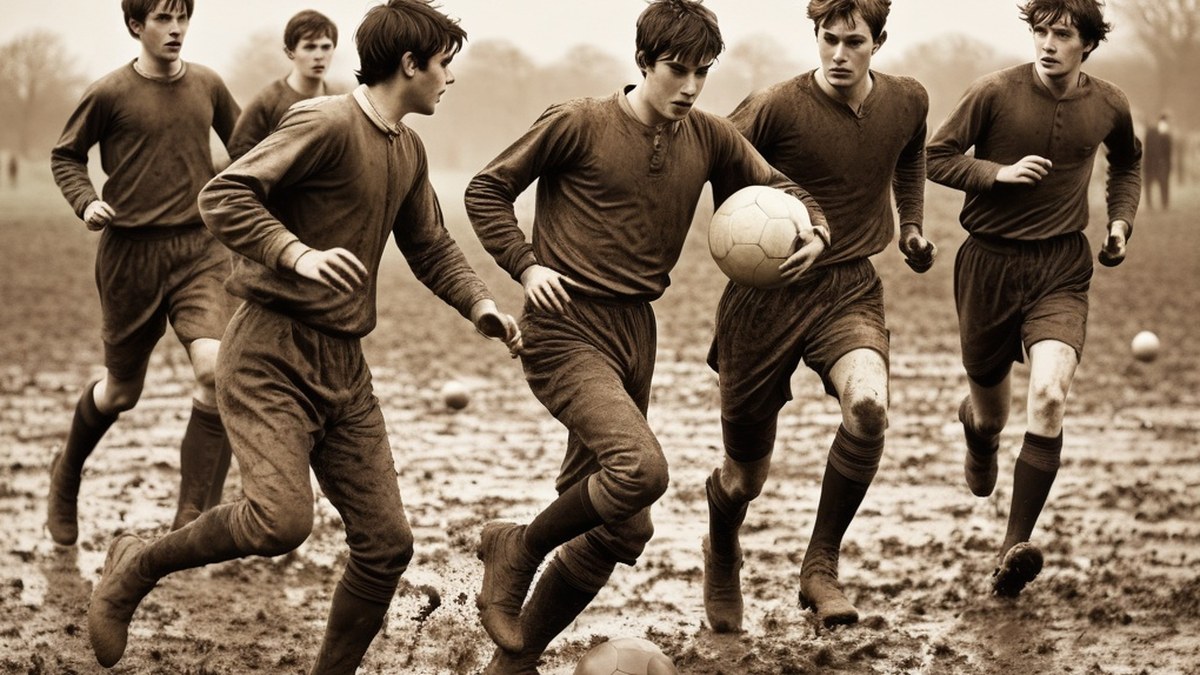
What If Association Football Had Never Standardized Its Rules in 1863?
Before 1863, 'football' in Britain meant dozens of incompatible local variants — some allowing carrying the ball, some not, with wildly different rules on tackling and field size. A single meeting in a London tavern settled on one standard version. Without it, the sport as billions know it today might never have coalesced.
Read the scenario →