The Dead Sea Scrolls were discovered between 1946 and 1956 in caves near Qumran, on the western shore of the Dead Sea, containing manuscripts in Hebrew, Aramaic, and Greek dating from roughly the 3rd century BCE to the 1st century CE — including the oldest known copies of books of the Hebrew Bible, and sectarian texts generally linked to the Essenes. The discovery landed at a moment with enough scholarly and technical infrastructure — photographic documentation, established paleographic and comparative Semitic linguistics, and decades of prior historical-critical biblical scholarship including Julius Wellhausen's Documentary Hypothesis (published 1878) — to study and preserve the find with real rigor, even though full publication and analysis still took decades. In the 1840s, by contrast, field archaeology as a disciplined method barely existed, biblical higher criticism was only just beginning to emerge, the region was under Ottoman administration with minimal antiquities protections, and photography itself had only been invented in 1839 — meaning none of the infrastructure that actually helped preserve and interpret the scrolls in the 20th century would have been available a century earlier.
What If the Dead Sea Scrolls Had Been Discovered a Century Earlier, Before Modern Biblical Scholarship Existed?
The Dead Sea Scrolls, discovered by Bedouin shepherds near Qumran in 1946–47, include the earliest known copies of Hebrew Bible texts and transformed modern understanding of Second Temple Judaism and early Christianity. Had the same caves been found around 1847 instead, the discovery would have landed in a radically different world — decades before photographic preservation, modern archaeological method, or the historical-critical biblical scholarship that was only then beginning to take shape.

The History
How It Changed
Imagine Bedouin shepherds or local explorers stumble upon the same Qumran caves around 1847 — exactly a century before the actual discovery — under Ottoman rule, in a world where modern biblical higher criticism is still in its infancy and no established archaeological or antiquities framework exists to receive such a find.
The Initial Impact
Without the methodical, if still imperfect, 20th-century approach to the find, the scrolls most likely pass quickly through antiquities dealers in Jerusalem into the hands of individual European and American collectors and museums, with little of the systematic archaeological documentation that at least partially protected the real discovery — a far higher risk of loss, damage, or pieces being scattered beyond any hope of reassembly.

The Local Picture
Without photographic and chemical preservation techniques that didn't yet exist, and without the hygroscopic and environmental controls later developed specifically for fragile ancient manuscripts, the scrolls deteriorate and fragment faster once removed from the stable cave environment, and are far more likely to be misattributed or mishandled by collectors without the specialist knowledge to recognize what they actually had.
The Global Picture
Scholarly reception collides directly with the still-raging 19th-century debates over biblical authorship. Evidence that Hebrew Bible texts existed in multiple textual traditions by the 2nd century BCE might accelerate the development of the historical-critical method decades before Wellhausen's own framework matured in the 1870s — or might instead be dismissed or suppressed amid religious controversy, given that most Western academic and religious institutions in the 1840s were far less prepared than their 1947 counterparts to receive evidence complicating traditional accounts of biblical authorship.
Specific Predictions
The sections above build the case in general terms. Here's what that case actually implies, stated as concrete claims rather than hedged possibilities — still part of the thought experiment, not a verified forecast, but specific enough to agree or disagree with.
- Without 20th-century conservation and photographic technology, a meaningfully larger share of the fragile scrolls would likely be lost, damaged, or rendered illegible before adequate documentation could occur, compared to the real discovery's survival rate.
- The find would become entangled in the active 19th-century controversy over biblical authorship and higher criticism, likely producing a more polarized and overtly religious reception than the comparatively more academic 20th-century response.
- The scrolls would more likely be dispersed piecemeal to private European and American collectors and museums rather than concentrated for coordinated study, given the far weaker legal and archaeological institutional framework in 1840s Ottoman Palestine.
- Full scholarly understanding of the scrolls' significance would take even longer to develop than it actually did — itself a matter of decades — given the absence of mid-20th-century tools like mature paleographic dating and comparative Semitic linguistics that genuinely aided the real analysis.

Extreme Scenarios
These push the premise furthest — the least likely, most speculative branches worth considering precisely because they show where the reasoning starts to strain.
Most of the find is lost to looting and poor handling before its significance is recognized
In the bleakest branch, the bulk of the scrolls are destroyed, sold off in fragments to unrecorded private buyers, or simply discarded as unremarkable old parchment by people with no framework for recognizing their significance, meaning only a small surviving fraction ever becomes available for the kind of study that, in actual history, revolutionized understanding of the biblical text and Second Temple Judaism.
The discovery accelerates Wellhausen-era biblical criticism by decades
In a more generative branch, a small number of scholars do recognize the find's significance early, and genuine evidence of multiple ancient biblical textual traditions feeds directly into the development of 19th-century historical-critical scholarship, meaningfully accelerating ideas that, in actual history, took until Wellhausen's 1878 Documentary Hypothesis and beyond to fully develop.
Related Scenarios
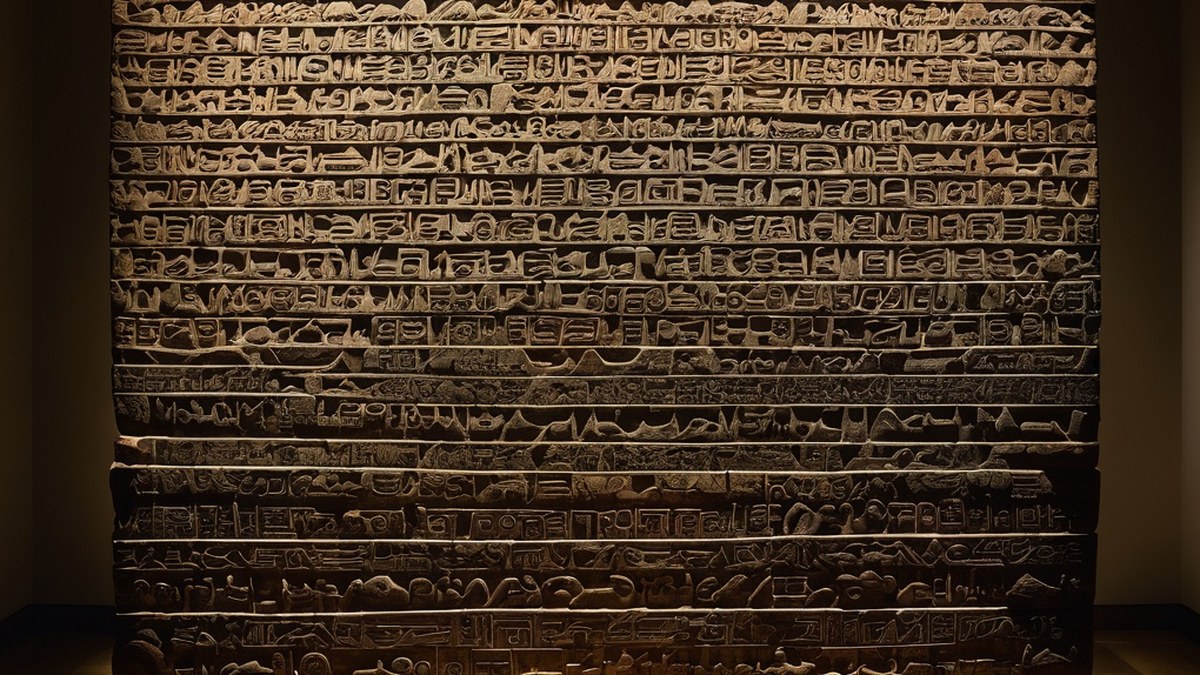
What If the Rosetta Stone Had Never Been Found?
In 1799, French soldiers rebuilding a fort near the Egyptian town of Rosetta discovered a stone slab inscribed with the same decree in three scripts: Egyptian hieroglyphs, Egyptian demotic script, and ancient Greek. That triple inscription became the key that finally allowed scholars to decipher hieroglyphic writing, which had been unreadable for well over a thousand years.
Read the scenario →
What If Ibn Battuta's 14th-Century Travel Accounts Had Been Translated Into European Languages Immediately?
Ibn Battuta, a Moroccan scholar, spent roughly thirty years (1325–1354) traveling some 120,000 kilometers across the Islamic world, Africa, and Asia, dictating a detailed account — the Rihla — upon his return. It remained confined almost entirely to the Arabic-reading world for centuries and wasn't substantially translated into a major European language until the 19th century, by which point Europe's Age of Exploration had already proceeded largely without the detailed geographic and economic knowledge his account contained.
Read the scenario →
What If Pompeii Had Been Evacuated Before Vesuvius Erupted?
Mount Vesuvius gave weeks of warning — earthquakes, tremors, a swelling of the ground — before it buried Pompeii in 79 CE. Almost nobody in the region recognized these as volcanic warning signs, because nobody living there had ever seen the mountain erupt before.
Read the scenario →