As Britain prepared to end its colonial rule over India, the Indian National Congress, led by figures including Gandhi and Jawaharlal Nehru, generally favored a unified independent state, while the Muslim League, led by Muhammad Ali Jinnah, pushed for a separate Muslim-majority nation to protect Muslims from what Jinnah argued would be permanent political marginalization in a Hindu-majority unified India. Britain's last Viceroy, Lord Mountbatten, oversaw a rushed partition process, moving the independence date forward and finalizing the new border — drawn largely by a British lawyer, Cyril Radcliffe, who had never visited India before and completed the boundary commission's work in about five weeks — with the details publicly announced only after independence had already occurred. The resulting partition triggered a mass migration of an estimated 10 to 20 million people across the new India-Pakistan border, as Hindus and Sikhs fled to India and Muslims fled to the newly created Pakistan, accompanied by communal violence, massacres, and sexual violence that killed an estimated one to two million people and left lasting trauma and hostility between the two new nations, including the unresolved Kashmir dispute that has caused multiple wars between India and Pakistan in the decades since.
What If the Partition of India Had Never Happened?
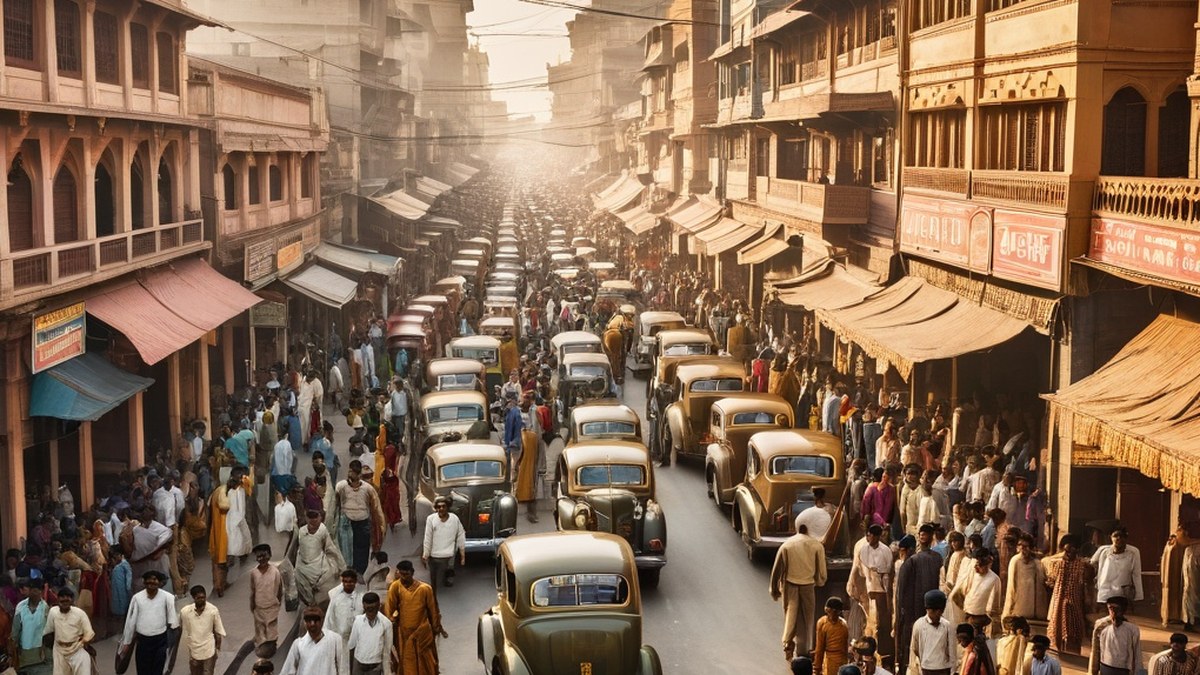
When British India gained independence in August 1947, it was simultaneously divided into two separate nations, India and Pakistan, along religious lines. The division triggered one of the largest mass migrations in human history and communal violence that killed an estimated one to two million people.
The History
How It Changed
Imagine Congress and the Muslim League reach a political compromise in 1946-47 — a federal structure with strong regional autonomy for Muslim-majority provinces within a single unified Indian state, an option that was genuinely discussed and proposed at the time (the Cabinet Mission Plan of 1946) before ultimately failing — avoiding partition while still addressing Jinnah's core concern about political marginalization through structural guarantees rather than a complete territorial split.
The Initial Impact
Without partition, the catastrophic 1947 mass migration and communal violence simply wouldn't happen in anything like the same form — thereby directly preventing the deaths of an estimated one to two million people and the displacement of between 10 and 20 million more, who in this scenario remain in their homes rather than undertaking often-deadly cross-border journeys in both directions.
The Local Picture
For the specific communities caught in the actual 1947 violence — particularly in Punjab and Bengal, the two provinces that were themselves partitioned and bore the worst of the bloodshed — a unified India means entire family and community histories unfold completely differently, without the specific, concentrated trauma of displacement and violence that profoundly shaped the identity and family history of millions of people and their descendants on both sides of the actual border.
The Global Picture
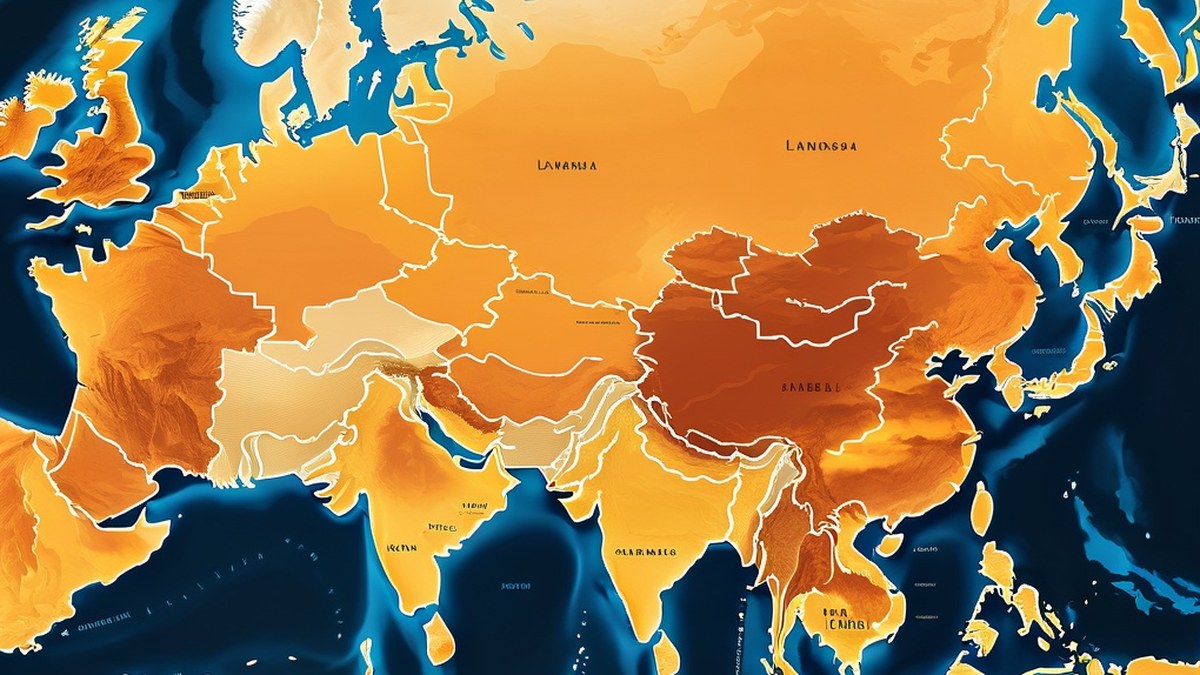
At a broader geopolitical level, a unified India emerging from independence as a single large state, rather than two separate and frequently hostile nations, would fundamentally reshape South Asian and global politics for the following decades — the India-Pakistan rivalry, including multiple wars, the unresolved Kashmir conflict, and both nations' eventual acquisition of nuclear weapons partly in response to each other, are all direct consequences of partition that simply wouldn't exist in the same form in a unified state, though a unified India would face its own significant internal challenges in managing religious and regional diversity at a scale and complexity that partition's advocates specifically argued would be unmanageable.
Specific Predictions
The sections above build the case in general terms. Here's what that case actually implies, stated as concrete claims rather than hedged possibilities — still part of the thought experiment, not a verified forecast, but specific enough to agree or disagree with.
- The estimated one to two million deaths and 10-20 million displacements of actual 1947 partition violence would be prevented, representing one of the largest single-event reductions in 20th-century mass casualties this site has considered.
- The India-Pakistan rivalry, including the wars of 1947-48, 1965, 1971, and 1999, and the unresolved Kashmir conflict, would not exist in the same form, fundamentally altering South Asian geopolitics and defense spending patterns for the following eight decades.
- Both India and Pakistan's historical nuclear weapons programs, developed substantially in response to each other's perceived threat, would likely follow a very different timeline or motivation in a unified state, with uncertain but likely significantly different consequences for South Asian and global nuclear proliferation.
- A unified India would face serious, ongoing internal challenges managing religious and regional diversity at an unprecedented scale, and there is genuine, contested historical debate about whether such a state could have remained politically stable and unified over subsequent decades.

Extreme Scenarios
These push the premise furthest — the least likely, most speculative branches worth considering precisely because they show where the reasoning starts to strain.
A unified India becomes one of the dominant global powers of the 20th century decades earlier
If a unified India successfully manages its internal religious and regional diversity through the federal structure this scenario imagines, the combined economic, demographic, and military scale of a unified subcontinent — avoiding the duplicated institutions, border tensions, and defense spending that partition produced — could plausibly have accelerated India's emergence as a major global power by several decades compared to its actual post-1991 economic liberalization trajectory.
Internal tensions eventually produce a different, perhaps equally severe fracture
A more sobering possibility: if the underlying religious and political tensions that drove the push for partition in the first place don't actually resolve through a federal compromise, a unified India could face serious internal conflict or eventual fragmentation along similar lines at a later date, under different and potentially less orderly circumstances than the (deeply flawed and bloody) formal partition process that actually occurred — a sobering reminder that preventing one specific catastrophic event doesn't necessarily resolve the underlying tensions that produced it.
Related Scenarios

What If South Vietnam Had Survived the Fall of Saigon?
On April 30, 1975, North Vietnamese forces captured Saigon, the capital of South Vietnam, ending the Vietnam War with a complete communist victory and the reunification of Vietnam under Hanoi's rule. The United States had withdrawn its combat troops two years earlier and, facing its own political exhaustion with the war, declined to intervene as South Vietnam collapsed.
Read the scenario →
What If the 1948 Berlin Airlift Had Failed?
When the Soviet Union blockaded all land and water routes into West Berlin in 1948, the Western Allies responded with an enormous, sustained airlift rather than military confrontation or abandonment of the city. Its success is often cited as one of the Cold War's defining early moments — but a sustained airlift of that scale was a genuinely difficult logistical undertaking that could plausibly have failed.
Read the scenario →
What If the 1979 Iranian Revolution Had Failed?
In early 1979, mass protests and strikes forced Iran's long-ruling monarch, Shah Mohammad Reza Pahlavi, into exile, ending over two thousand years of Persian monarchy. Within months, the revolution's initially diverse coalition of secular, leftist, and religious groups had been consolidated under the leadership of the exiled cleric Ayatollah Khomeini, establishing the Islamic Republic of Iran.
Read the scenario →